Technical Filters: Above 50/200-Day MA, High Relative Volume
Introduction
Are you looking to spot high-potential stocks with proven momentum? Technical filters: above 50/200-day MA, high relative volume is a popular strategy used by both beginner and experienced traders to find stocks that are likely to trend higher. This approach combines the power of trend-following (using moving averages) and market activity (relative volume) for a clear, data-driven trading signal.
Think of it as shining a spotlight on the stocks most likely to be making moves—helping you cut through the market noise and focus on the best opportunities. If you’ve ever felt overwhelmed by thousands of stocks available, this tool can quickly narrow your search and boost your confidence.
What is It?
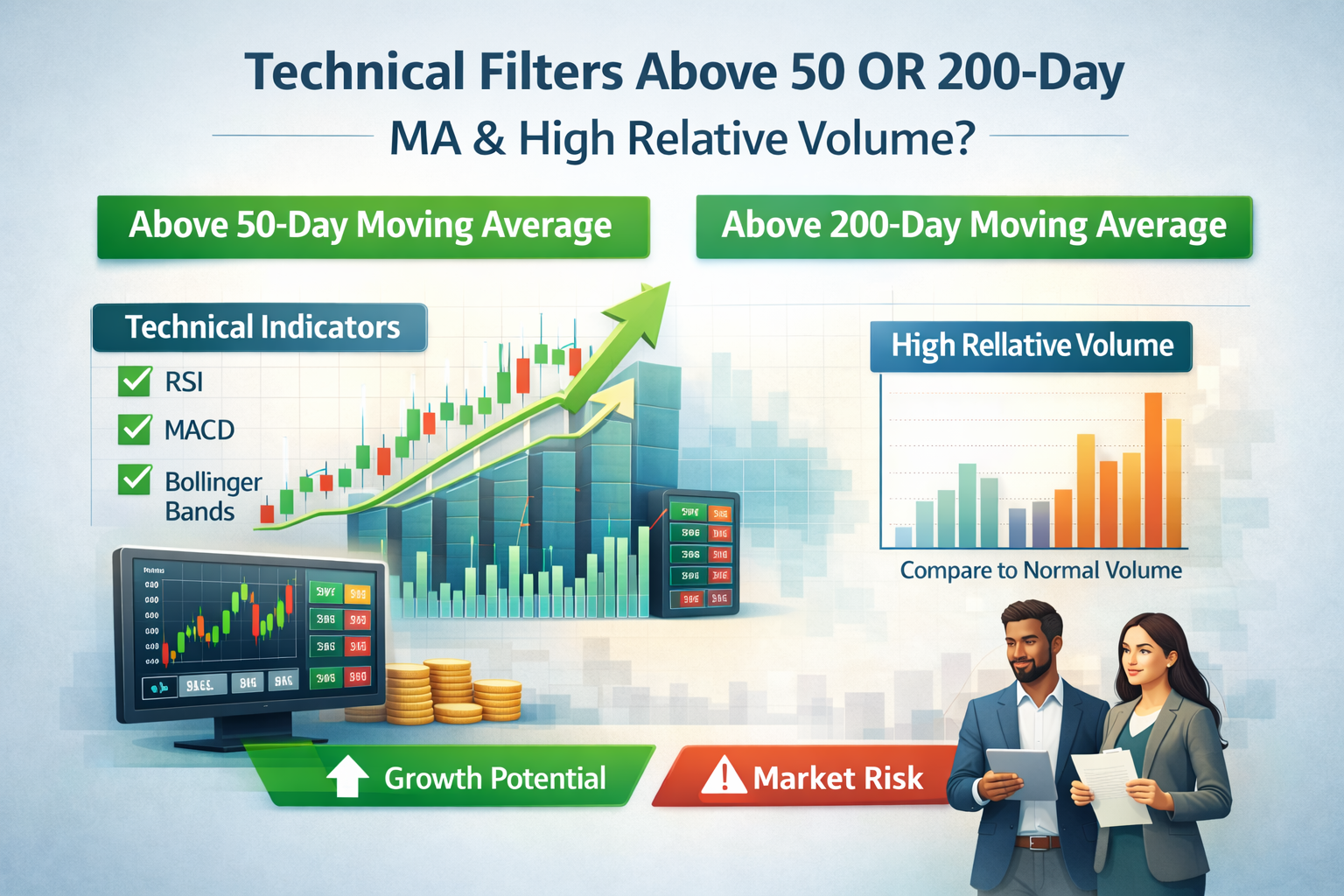
Technical filters: above 50/200-day MA, high relative volume refers to using a stock screener to find stocks where:
- Price is above its 50-day or 200-day moving average (MA): This usually means the stock is in an uptrend.
- Relative volume is high: The current trading volume is higher than usual, showing increased interest from traders.
Essence: “Spot stocks in strong trends with heavy trading activity.”
A Relatable Hook for Beginners
Ever walked into a store and noticed a huge crowd around a particular product? Chances are, it’s something popular or important. The same idea applies here—stocks above their moving averages with high relative volume are drawing extra attention. These may be the “hot items” of the market!
Step-by-Step Guide
- Access a Stock Screener:
- Use free tools like Yahoo Finance, TradingView, or Finviz.
- Set the Price Filter:
- Select “Price above 50-day MA” and/or “Price above 200-day MA.”
- Add Relative Volume Filter:
- Set relative volume or “volume ratio” to greater than 1.5 or 2 (meaning 50-100% more trading than average).
- Review the List:
- You’ll see stocks in solid uptrends with active trading.
- Research Further:
- Check recent news, earnings, or analyst opinions to understand why the stock is moving.
- Make a Decision:
- Decide if the stock fits your investment goals. Always use risk management.
Breaking Down the Topic
- 50-day MA: Reflects short-to-medium-term trend. If price is above, momentum often bullish.
- 200-day MA: Shows the long-term health of the trend. Being above means broader market trust.
- High Relative Volume: Signals something significant happening (earnings, news, upgrades/downgrades).
Advantages
- Easily identifies strong, trending stocks.
- Focuses on popular stocks with high participation.
- Reduces the risk of “dead” or illiquid stocks.
- Rapid scanning—saves time for busy investors.
Disadvantages
- May miss turnaround or undervalued opportunities below moving averages.
- Stocks can be overbought after heavy moves (risk of late entry).
- Doesn’t guarantee future performance; false breakouts possible.
Alternative Investment Options
- Dividend Stock Investing: Focuses on steady income from reliable companies.
- Index Funds or ETFs: Buy a basket of stocks for diversification and less manual research.
- Value Investing: Searches for undervalued stocks below their moving averages.
- Sector/Thematic ETFs: Invest in trends like technology, green energy, or healthcare.
Beginner’s Tips
- Start with just one filter, like price above 200-day MA, then add volume after.
- Paper trade (simulate trades) first before using real money.
- Always do additional research before buying.
- Never risk more than you can afford to lose.
Advanced Variations
- Combine with Other Technical Filters: Add RSI, MACD, or Bollinger Bands for stronger signals.
- Use Multiple Timeframes: Look for stocks above their 50/200-day MA on daily and weekly charts for confirmation.
- Backtest Strategies: Use historical data to see which filters worked best in the past.
FAQs
- What does “above 50/200-day MA” mean?
It means the stock’s price is trading higher than its 50-day or 200-day moving average, a sign of an upward trend.
- Why use high relative volume?
High relative volume means more traders are interested. Big moves are often supported by big volume.
- Can beginners use these technical filters?
Yes! They’re simple and available on most free platforms.
- Do these filters guarantee profits?
No strategy is perfect, but these filters help you focus on stronger candidates.