Swing Trading: Capture Moves Over Days and Weeks
Introduction
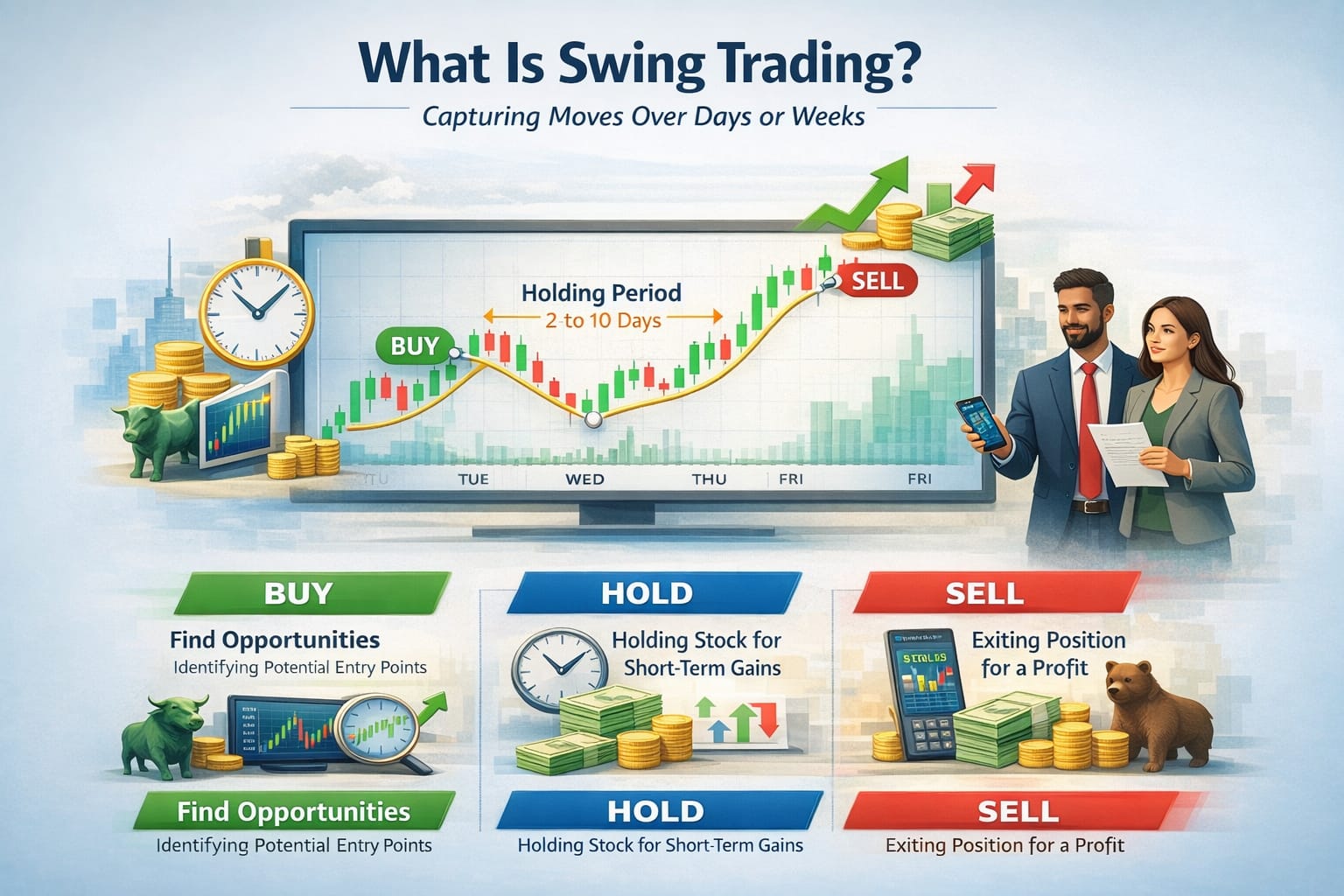
Swing trading is a popular trading style among both new and seasoned investors. At its core, swing trading means holding positions for a few days to several weeks to profit from price moves or “swings.” The essence of swing trading is about catching the middle part of a price move—finding clarity in the chaos and seizing short- or medium-term opportunities.
If you have ever wondered how some people manage to buy a stock, wait a little, and sell for profit without watching the market every minute, swing trading could be perfect for you.
Step-by-Step Guide: Getting Started with Swing Trading
- Learn the Basics
Start by understanding what swing trading is: it's a strategy where you buy and sell stocks, ETFs, or other assets based on expected market movements that unfold over days or weeks.
- Choose a Brokerage Account
Set up an account with a reputable online broker. Look for platforms with low fees and user-friendly interfaces.
- Pick Your Markets
Decide where you want to swing trade—stocks, forex, crypto, or commodities. Beginners often start with stocks or ETFs.
- Analyze the Charts
Use chart analysis (technical analysis) to locate patterns and trends. Look for clear entry (buy) and exit (sell) points.
- Set Your Trade Rules
Plan how much you’ll invest per trade, set your stop-loss (to limit losses), and target price (where to take profits).
- Place Your Trades
Enter your trade and let it run—monitor daily, but try not to constantly “babysit” your positions.
- Review and Learn
After closing your swing trades, review results. What worked? What didn’t? Use this feedback to improve each time.
Details: How Swing Trading Works
- Timing: Unlike day trading, swing traders look to benefit from price moves that take days to weeks.
- Strategies: Common methods include buying at support, selling at resistance, or using technical indicators like moving averages.
- Tools Used: Candlestick charts, price trends, volume analysis, and basic news scanning.
- Risk Control: Always use stop-loss orders to avoid large losses if the market moves against you.
Advantages of Swing Trading
- Less time-consuming than day trading—no need to watch the market all day long.
- Potential for steady, moderate profits over time.
- Flexibility—suitable even if you have a full-time job or other commitments.
- Exposes you to less stress compared to short-term scalping or high-frequency trading.
Disadvantages of Swing Trading
- Holding positions overnight exposes you to “gap risk” (prices can jump on news while markets are closed).
- Requires patience and discipline—not every trade will be a win.
- Sometimes you may miss out on bigger moves if you exit too early.
- Can result in losses if the market suddenly reverses due to unexpected events.
Alternative Investment Options
- Day Trading: Enter and exit trades within the same day. More intense, higher risk.
- Position Trading: Hold trades for weeks or months—less active than swing trading.
- Long-Term Investing: Buy and hold investments for years, focusing on fundamentals rather than short-term moves.
- Robo-Advisors: Automated investing for hands-off growth over time.
Beginner's Tips for Swing Trading
- Start small—only risk money you can afford to lose.
- Keep a trading journal to record your trades and lessons learned.
- Don’t let emotions guide your decisions—stick to your plan.
- Use limit orders to control your entry and exit points.
- Educate yourself—read swing trading books and follow experts online.
Advanced Variations for Experienced Traders
- Option Swing Trading: Use options to benefit from price swings with less capital, but higher risk.
- Short Selling: Profit from falling prices (understand the risks carefully).
- Algorithmic Swing Trading: Create or use trading bots to automate swing trade strategies.
- Multi-Asset Swing Trading: Apply swing techniques across markets like forex, commodities, or crypto.
Frequently Asked Questions about Swing Trading
- Is swing trading good for beginners?
Yes, swing trading can be suited for beginners as it doesn't require constant screen time, but discipline and willingness to learn are musts.
- How much money do I need to start swing trading?
Many brokers let you start with a few hundred dollars, but $2,000-$5,000 gives you more flexibility.
- Do I need to use leverage?
Leverage is not required and increases risk. Beginners should avoid it at first.
- What’s the best timeframe chart for swing trading?
Daily and 4-hour charts are among the most popular.
- Can I swing trade part-time?
Yes! Many people swing trade with a full-time job.
Swing trading is a flexible, practical way to try and grow your money over days or weeks, without having to watch markets all day long. With smart planning, patience, and practice, it's a trading style that fits many lifestyles. Good luck on your swing trading journey!