Sector/Industry Comparisons: A Beginner’s Guide
Introduction
Have you ever wondered why some stocks soar while others stall—even when the whole market seems to be rising? The answer often lies in sector/industry comparisons. This simple yet powerful tool helps investors and traders like you understand how one sector or industry is stacking up against others. In essence, it's all about gaining clarity by comparing similar groups for smarter decision-making.
Relatable hook: If you've ever compared restaurants before picking one for dinner, you're already halfway there—sector/industry comparisons work much the same way. They help you make informed choices, not just hope for the best!
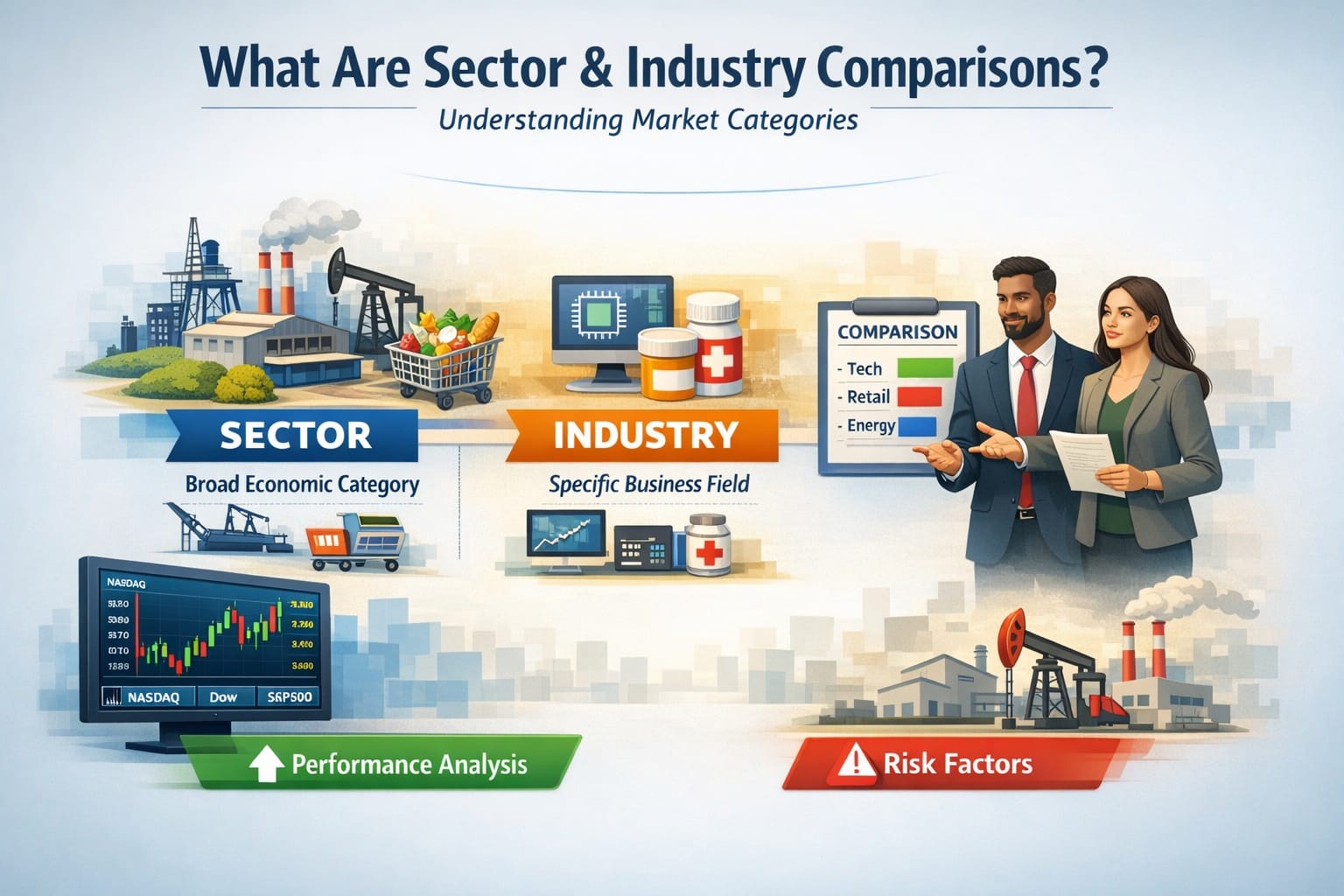
Step-by-Step Guide: How to Compare Sectors or Industries
- Pick Sectors or Industries to Compare:
Choose the areas you’re interested in (like technology vs. healthcare, or banks vs. insurance).
- Gather Key Data:
Look for indicators such as revenue growth, profit margins, stock prices, P/E ratios, dividend yield, or average returns.
- Use Comparison Tools:
Check reputable financial websites (like Yahoo Finance, Morningstar, or sector ETFs) for easy charts and data.
- Look for Trends:
See which sector is trending up, steady, or lagging behind. Spot strong or weak industries.
- Make Your Move:
Decide where to invest or diversify based on your findings.
Why Do Sector/Industry Comparisons Matter?
- They bring clarity and boost confidence in your investments.
- They help identify rising stars and warn about struggling sectors.
- You can spot broader economic trends—like when tech outpaces energy, or vice versa.
Advantages of Sector/Industry Comparisons
- Better Decision-Making: You can select investments that match your risk appetite and goals.
- Diversification: Balance your portfolio by spreading investments across strong or resilient sectors.
- Risk Management: Avoid putting all your eggs in one basket (industry or sector-wise).
- Opportunity Discovery: Find undervalued or fast-growing sectors before others catch on.
Potential Disadvantages
- Over-simplification: Not all companies in a sector will perform the same.
- Outdated Data: Trends can turn quickly, especially during abrupt economic changes.
- Bias: Focusing too much on winners can lead to missing hidden gems in slower sectors.
Alternative Investment Options
If sector/industry comparisons aren’t your style, here are a few other methods for picking investments:
- Stock-specific Analysis: Dive deep into individual companies' financials.
- Thematic Investing: Invest based on broader themes, like green energy or AI.
- Index Funds or ETFs: Allow automatic diversification—track the overall market or specific sectors with little effort.
- Technical Analysis: Use stock price charts and patterns to spot trends.
Beginner's Tips for Sector/Industry Comparisons
- Start simple—compare no more than two or three sectors at first.
- Stick to well-known indexes or ETFs for reliability.
- Watch out for one-off events: Avoid overreacting to short-term news.
- Keep learning—a little research goes a long way!
Advanced Tips for Experienced Investors
- Adjust for market cycles: Compare sector performance during bull vs. bear markets.
- Use relative strength analysis (comparing sector returns to market averages) for deeper insights.
- Mix in fundamental analysis (like valuation metrics) with technical indicators for layered decisions.
- Explore global sector/industry comparisons to diversify internationally.
Frequently Asked Questions (FAQ)
Q: What’s the difference between a sector and an industry?
A sector is a broad group, like technology; an industry is a specific subset, like software or semiconductors.
Q: How often should I do sector/industry comparisons?
Quarterly or when there’s big economic news, but a regular review keeps you up to date.
Q: Can I use sector/industry comparisons for short-term trading?
Yes, many traders use these comparisons to spot momentum or catch trends early.
Sector/industry comparisons are a tried-and-true way to boost the clarity and performance of your portfolio. With a little practice, you’ll find this investing strategy can turn the confusing world of stocks into a set of clear options—making your financial goals feel a lot closer!