Position Investing: Hold for Months/Years – A Beginner’s Guide
Introduction
Are you new to the world of investing and wondering how to start building wealth steadily over time? If the fast-paced world of day trading seems overwhelming, you might find comfort and success with Position Investing. This long-term strategy, where you simply hold onto investments for months or even years, can offer less stress and the potential for substantial gains.
Essence: Position investing means buying and holding assets—like stocks or funds—for an extended period to ride out short-term ups and downs, aiming for big-picture growth.
Imagine letting your investments work for you as life goes on: You don’t need to check prices every day, or worry about short-term market noise. That’s the beauty of position investing—simple, patient, and potentially powerful.
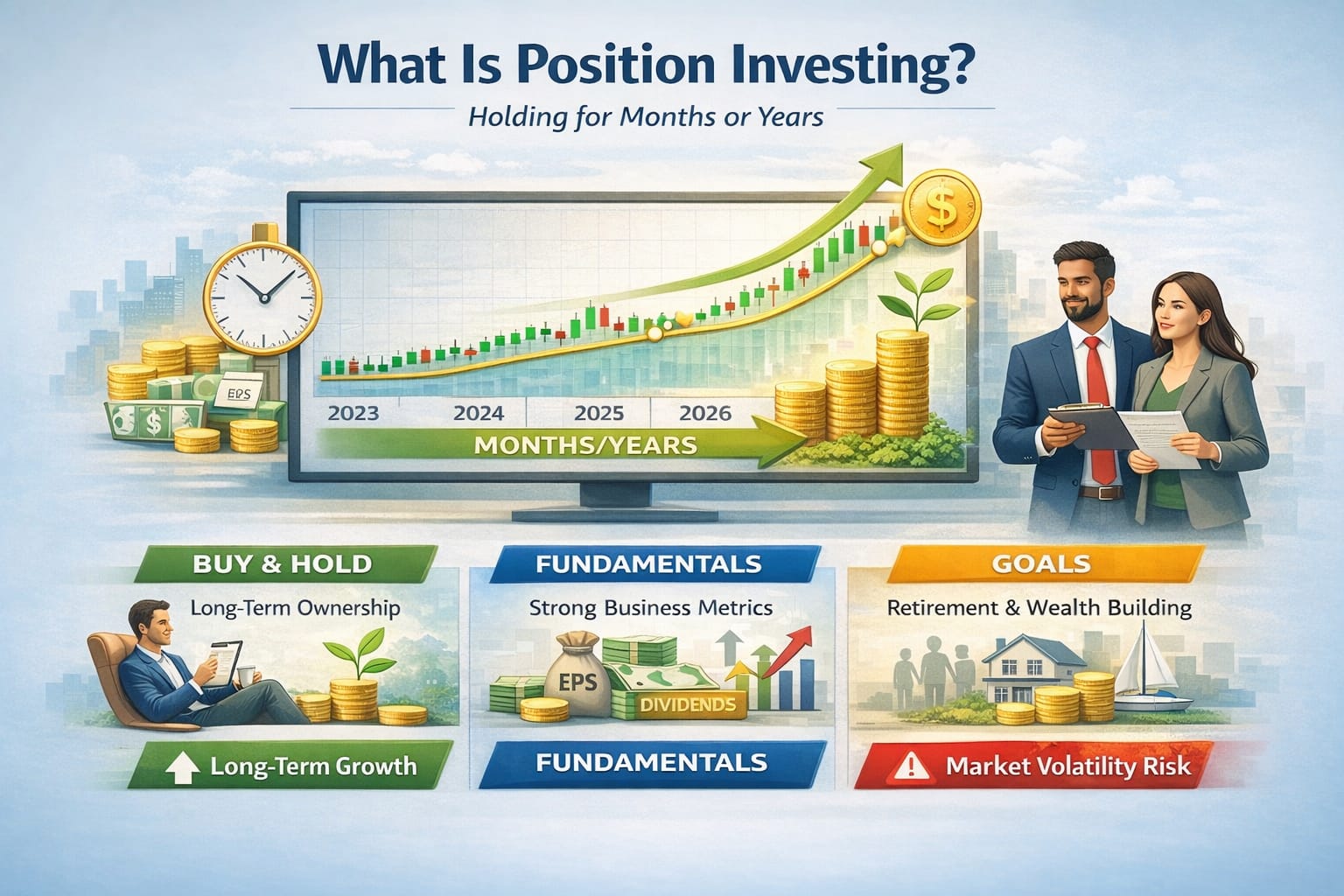
What is Position Investing?
Position investing (sometimes called “buy and hold”) is an investment approach where you purchase stocks, exchange-traded funds (ETFs), or other assets and plan to keep them for a significant amount of time—usually months to years. The main goal is to benefit from the overall rise in value that often comes with market growth over long periods.
- Clarifies your strategy: Focus on future goals instead of short-term market moves.
- Lets your investments mature: Give companies time to grow and compound returns.
Step-by-Step Guide: How to Start Position Investing
- Set Your Financial Goals
Ask yourself: What are you saving for? Retirement, a house, education? Setting a clear goal makes it easier to stay the course during market swings.
- Choose What to Invest In
Pick assets with long-term potential. Common choices include:
- Stocks of strong, stable companies (like Apple, Microsoft)
- Index funds or ETFs (such as S&P 500 funds)
- Bonds or mutual funds for diversification
- Open a Brokerage Account
Signing up with a trusted online broker gets you access to the market. Many offer user-friendly apps and educational resources.
- Invest Consistently
Put in money regularly (every month or quarter)—regardless of market headlines. This can help smooth out your average purchase price.
- Hold, Review, and Adjust
Hold through market ups and downs. Check your investments a few times a year. Rebalance if needed but avoid constant tinkering.
Advantages of Position Investing
- Lower stress: No need to time the market daily.
- Fewer fees: Fewer trades mean lower costs over the long term.
- Potential tax benefits: Holding for over a year can mean lower capital gains taxes.
- Compounding returns: Long-term growth lets your gains earn even more over time.
- Less time-consuming: Spend less time tracking and more time living.
Disadvantages of Position Investing
- Requires patience: You won’t see quick profits.
- Market drops can sting: You must be ready to ride out downturns without panic selling.
- Missed short-term opportunities: Sometimes, fast trades can make quick gains—but with higher risk.
Alternative Investment Options
- Short-Term Trading: Buying and selling within days or weeks for quick profits. (More stressful, riskier, needs more time.)
- Dollar-Cost Averaging: Invest a fixed amount regularly, regardless of price fluctuation. Good for beginners!
- Index Fund Investing: Buy funds that track the whole market. Set it and forget it.
- Robo-Advisors: Let technology manage your portfolio based on your risk level and goals.
Beginner’s Tips for Position Investing
- Start small while you learn.
- Focus on broad funds or top companies to spread the risk.
- Reinvest dividends for faster growth.
- Ignore market noise—tune out the daily headlines.
- Don’t check prices every day.
- Read and learn continuously to build your confidence.
Advanced Variations for Experienced Traders
- Sector Rotation: Shift your holdings between sectors (like tech, healthcare) based on macro trends.
- Core-and-Satellite: Hold a strong “core” (broad market fund), then add “satellite” positions (individual stocks) for extra growth.
- Using Options: Experienced investors sometimes use covered calls to generate extra income on long-term positions.
FAQs About Position Investing
Q: Is position investing safe?
A: While it reduces risk compared to frequent trading, all investing carries risk. Diversifying and holding for the long term helps make it safer.
Q: Can I lose money with position investing?
A: Yes, especially if you sell during downturns or pick bad investments. But historically, markets grow over time, rewarding patience.
Q: How much money do I need to start position investing?
A: You can start with as little as $50–$100 in many brokerage accounts. More important is to invest regularly and stay consistent.
Key Takeaways
- Position investing means buying and holding for months or years.
- It’s beginner-friendly, less stressful, and lets your investments grow over time.
- Be patient, diversify, and focus on your financial goals.