Options Basics: Calls, Puts, Covered Calls, and Cash-Secured Puts
Introduction
Thinking about exploring the world of options trading? Options basics can sound scary at first, but understanding calls, puts, covered calls, and cash-secured puts is much easier than you may think. Options are simply contracts that give you the right— but not the obligation— to buy or sell a stock at a specific price before a certain date.
One-liner: Options offer investors flexible ways to potentially profit (or protect themselves) using stocks, with a variety of simple strategies even beginners can try.
Feeling overwhelmed by complicated investing lingo? You’re not alone—and that’s exactly why this guide breaks down these options basics clearly and step-by-step, even if you’ve never traded before.
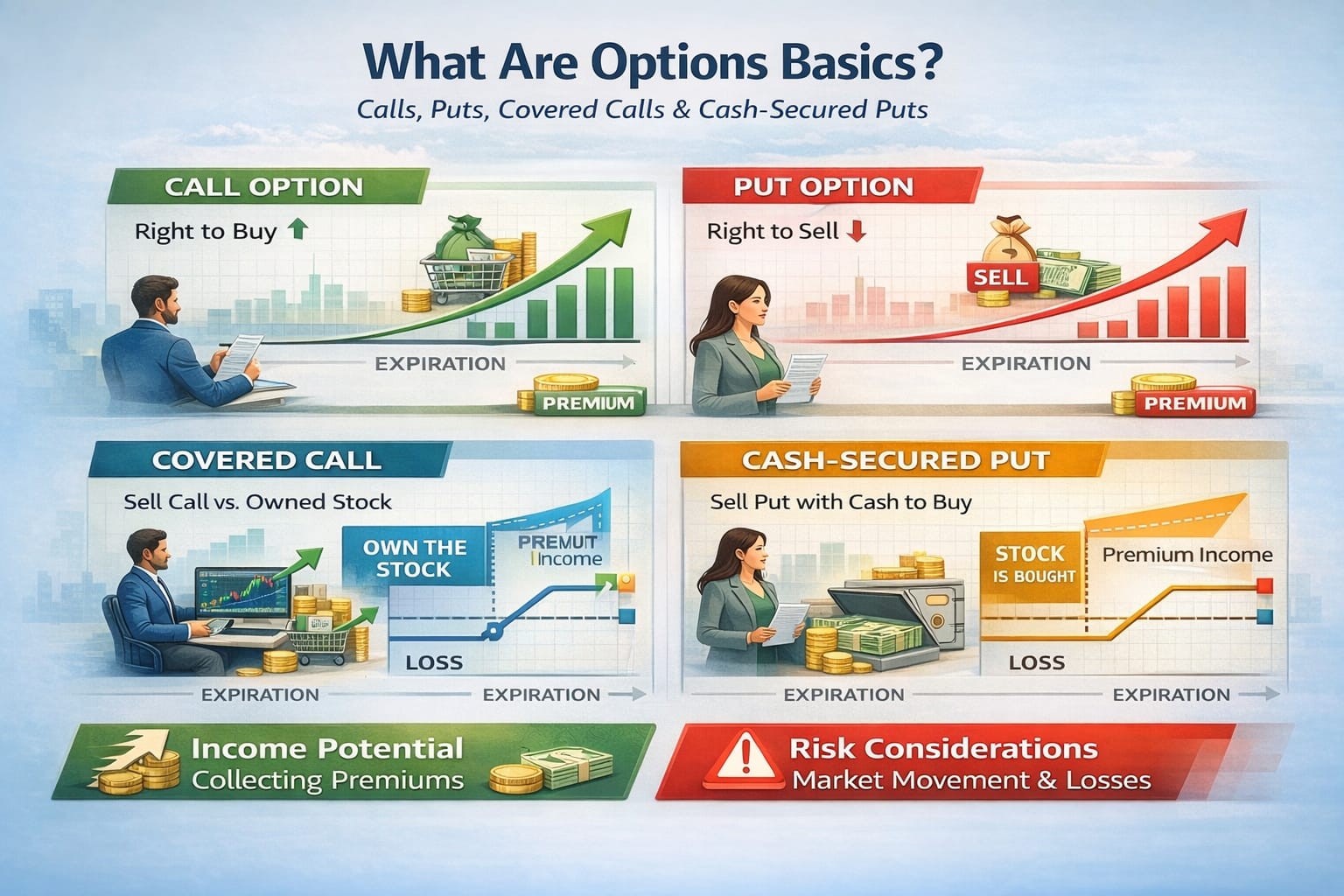
Step-by-Step Guide: Understanding Options Basics
- What are Options?
Options are contracts tied to stocks or ETFs. They let you buy (with a "call") or sell (with a "put") shares at a specific price, called the strike price, before a set date (the expiration date).
- What is a Call Option?
- A call option gives you the right to buy 100 shares of a stock at the strike price before expiration.
- You buy a call if you think the stock price will go up.
- Example: You buy a call for Stock X at $50. If Stock X rises to $60, you can buy it at $50 and sell at $60, keeping the profit (minus your option cost).
- What is a Put Option?
- A put option gives you the right to sell 100 shares at the strike price before expiration.
- You buy a put if you think the stock price will go down.
- Example: You own a put for Stock Y at $40. If Stock Y falls to $30, you can still sell it for $40.
- What is a Covered Call?
- A covered call is when you own shares of stock and sell a call option on that stock.
- If the stock stays below the strike price, you keep the option premium (extra cash). If it goes above, you have to sell your shares at the strike price, but still keep the premium.
- What is a Cash-Secured Put?
- When you sell a put but keep enough cash to buy the stock if needed, it’s a cash-secured put.
- If the stock price drops below the strike, you may need to buy the stock but at a lower price—plus you keep the option premium.
- How do I Start Trading Options?
- Open an options-approved brokerage account.
- Start by learning with paper (virtual) trading.
- Practice buying calls/puts before selling covered calls or cash-secured puts.
Breaking Down Options Basics Further
- Calls: Betting the price will rise.
- Puts: Betting the price will fall.
- Covered Calls: Earning extra income on stocks you already own.
- Cash-Secured Puts: Getting paid to potentially buy a stock at a discount.
Advantages of Options
- Flexibility: Options let you profit when stocks move up, down, or even stay flat.
- Lower Cost: Options often cost less than buying shares outright.
- Hedging: Use puts to protect your portfolio from losses.
- Extra Income: Selling covered calls brings in cash from stocks you already own.
- Leverage: With a small investment, you control a larger amount of stock.
Disadvantages of Options
- Risk of Losing Entire Investment: Most options expire worthless if the stock doesn’t move as you hoped.
- Complexity: Can be confusing, especially for beginners.
- Time Decay: Options lose value as the expiration date nears (if not profitable yet).
- Assignment Risk: With covered calls and cash-secured puts, you may have to sell or buy stock unexpectedly.
Alternative Investment Options
- Stocks: Simple ownership with long-term growth potential.
- Index Funds/ETFs: Less risky, diversified investments.
- Mutual Funds: Professionally managed baskets of stocks.
- High-Interest Savings Accounts: For guaranteed, steady interest.
- Bonds: Safer income over time, but lower returns.
Beginner's Tips for Trading Options
- Start small—never risk money you can’t afford to lose.
- Focus on buying calls or puts before trying selling strategies.
- Use options on stocks you already understand.
- Learn the basics and practice with paper trades first.
- Read up on expiration dates and strike prices—these are crucial!
Advanced Variations for Experienced Traders
- Spreads: Combining options to limit risk and boost potential gains.
- Iron Condors/Butterflies: Advanced strategies for making money in flat markets.
- LEAPS: Long-term options contracts for big-picture investments.
- Rolling Covered Calls: Adjusting your call position as markets move.
FAQs: Options Basics
- Is options trading risky?
- Yes, options can be risky—especially if you don’t understand how they work. Start simple and learn the basics.
- How much money do I need to trade options?
- You can start with a few hundred dollars, especially when buying options, but selling (like covered calls) often requires more capital.
- What’s the difference between a covered call and a cash-secured put?
- Covered call: You own the stock and sell a call. Cash-secured put: You sell a put and keep cash ready in case you need to buy stock.
- Will I lose more than I invest?
- Buying options means you can only lose what you pay. Selling options (with coverage, like covered calls and cash-secured puts) has defined risk, but be cautious about uncovered (naked) strategies.
Conclusion
Mastering options basics—calls, puts, covered calls, and cash-secured puts—gives you more ways to potentially profit from stocks or protect your investments. Options can open exciting doors for both newcomers and experienced traders when approached with care and knowledge.
Remember: Start with the basics, practice, and never stop learning. The power of options trading is within your reach!