Day Trading: Intraday Setups—Clear Steps, Tips & Alternatives
Introduction
Day trading, especially using intraday setups, has become a popular way for traders to seek fast profits in the financial markets. This method of trading can be rewarding, but it also demands advanced skills, a focused mindset, and a larger starting capital than most basic forms of investment. In its essence, intraday trading is all about buying and selling financial assets within the same trading day using specific setups for entering and exiting trades.
If you're curious about leveraging quick price movements but feel unsure where to begin, this step-by-step guide is designed just for you. Let’s make sense of day trading using intraday setups—breaking it down into clear, practical steps.
What is Day Trading: Intraday Setups?
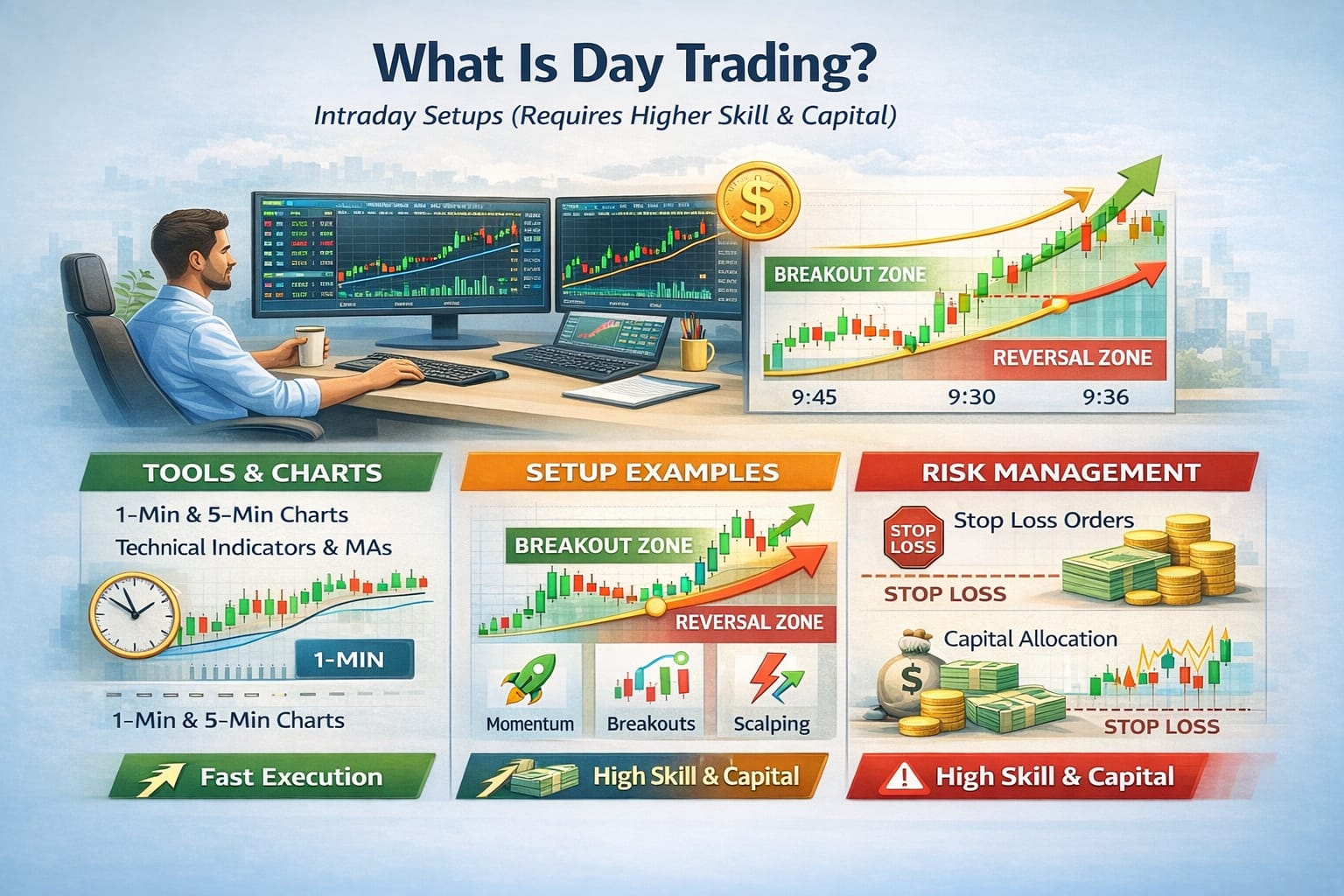
Day Trading: Intraday setups means identifying specific chart patterns, signals, or conditions—called “setups”—that tend to lead to profitable trades within a single trading day. Think of these setups as your roadmap; they help you decide when to enter or exit a trade, aiming for quick gains and avoiding overnight risk. The core idea: seize short-term price movements with sharp decision-making.
Imagine watching the market through a magnifying glass, jumping in and out of trades as opportunities appear—all within a few hours.
Step-by-Step Guide to Day Trading: Intraday Setups
- Choose a Reliable Broker:
Open an account with a trustworthy online broker who offers real-time charts and fast trade execution.
- Set Up Your Workstation:
You’ll need a fast computer, stable internet, and at least two good monitors. Comfort and good hardware reduce stress and lag.
- Learn Basic Chart Reading:
Start with simple charts and learn to recognize common intraday patterns, like breakouts, reversals, and trend continuations.
- Pick Your Favorite Intraday Setups:
Examples include:
- Opening Range Breakout: Trades based on the high and low during the first 30 minutes.
- Pullback Trades: Entering a trade when the price pulls back to a certain level after a strong move.
- Momentum Trades: Buying when a stock shows strong movement and high volume.
- Plan Each Trade:
Before entering, set your “entry price” (when to buy), “stop loss” (maximum loss you’ll accept), and “take profit” (your goal).
- Practice Risk Management:
Never risk more than 1-2% of your capital on a single trade. This keeps you in the game even after a few losses.
- Use Demo Accounts First:
Practice your intraday setups in a simulated account with no real money. This helps build your skill and confidence risk-free.
- Log Every Trade:
Maintain a simple trade journal. Record each setup, your reasoning, and the outcome. Learn from your wins and losses!
Advantages of Day Trading with Intraday Setups
- No Overnight Holds: You close all trades before the market ends, avoiding surprise news or gaps.
- Quick Turnaround: Realize gains (or losses) in hours, not months.
- Many Opportunities: Markets give multiple chances each day with the right setups.
- Controlled Exposure: Set strict stops and targets to manage risk tightly.
Disadvantages & Challenges
- High Skill Required: Success needs fast thinking, strong discipline, and good chart reading.
- Larger Capital Demands: Frequent trading and risk controls mean you need more money in your account.
- Stressful & Time-Intensive: Constant screen-watching can be exhausting and emotionally draining.
- Costs Add Up: Commissions and spreads chip away at profits if not careful.
Alternative Investment Options
- Swing Trading: Hold positions for several days, balancing risk and time commitment.
- ETFs & Mutual Funds: Invest in baskets of stocks for passive, long-term growth.
- Dividend Stocks: Earn income over time with lower stress than day trading.
- Robo-Advisors: Automated, low-fee investment choices for hands-off investors.
Beginner’s Tips for Day Trading: Intraday Setups
- Start very small; never use money you can’t afford to lose.
- Stick to just 1-2 setups until you master them.
- Avoid chasing trades or revenge trading after a loss.
- Take breaks—don’t feel glued to the screen all day.
- Learn from every trade, good or bad.
Advanced Variations for Experienced Traders
- Algorithmic Intraday Setups: Create or adapt automated strategies for faster execution.
- Multiple Time Frame Analysis: Confirm intraday setups by checking longer time charts (e.g., 1-day, 1-hour).
- Sector Rotations: Identify which industries are showing momentum on a given day and adjust setups accordingly.
- Options Day Trading: Use options contracts for leverage and complex setups.
Frequently Asked Questions
1. Do I need a lot of money to start day trading with intraday setups?
You need more capital than most long-term investing styles. In the US, pattern day traders must keep at least $25,000 in their account. Elsewhere, brokers may set their own minimums.
2. Can beginners be successful at day trading?
It’s possible with thorough education, strong discipline, and lots of practice—but there’s a steep learning curve. Expect setbacks and always manage your risk carefully.
3. What’s the best time of day to use intraday setups?
The opening and closing hours tend to be most active, offering more trading chances but also more volatility.
4. Are there tools that can help?
Yes! Trading platforms with advanced charting, backtesting, and alerts are very helpful. Many offer free trials—use them to practice before committing real money.