How Supply and Demand Drives Price: A Beginner's Guide
Introduction
If you’ve ever wondered why some things cost more than others, or why prices seem to constantly change, it all comes down to a basic economic principle: supply and demand drives price. This simple rule influences everything from the groceries you buy to stocks and cars.
Essence: Supply and demand is about how many goods are available (supply), how much people want them (demand), and how this relationship determines what things cost (price).
Hook for Beginners: Picture this: Think about when a new video game console launches and is hard to find—why do prices skyrocket on resale websites? That’s supply and demand driving price in action!
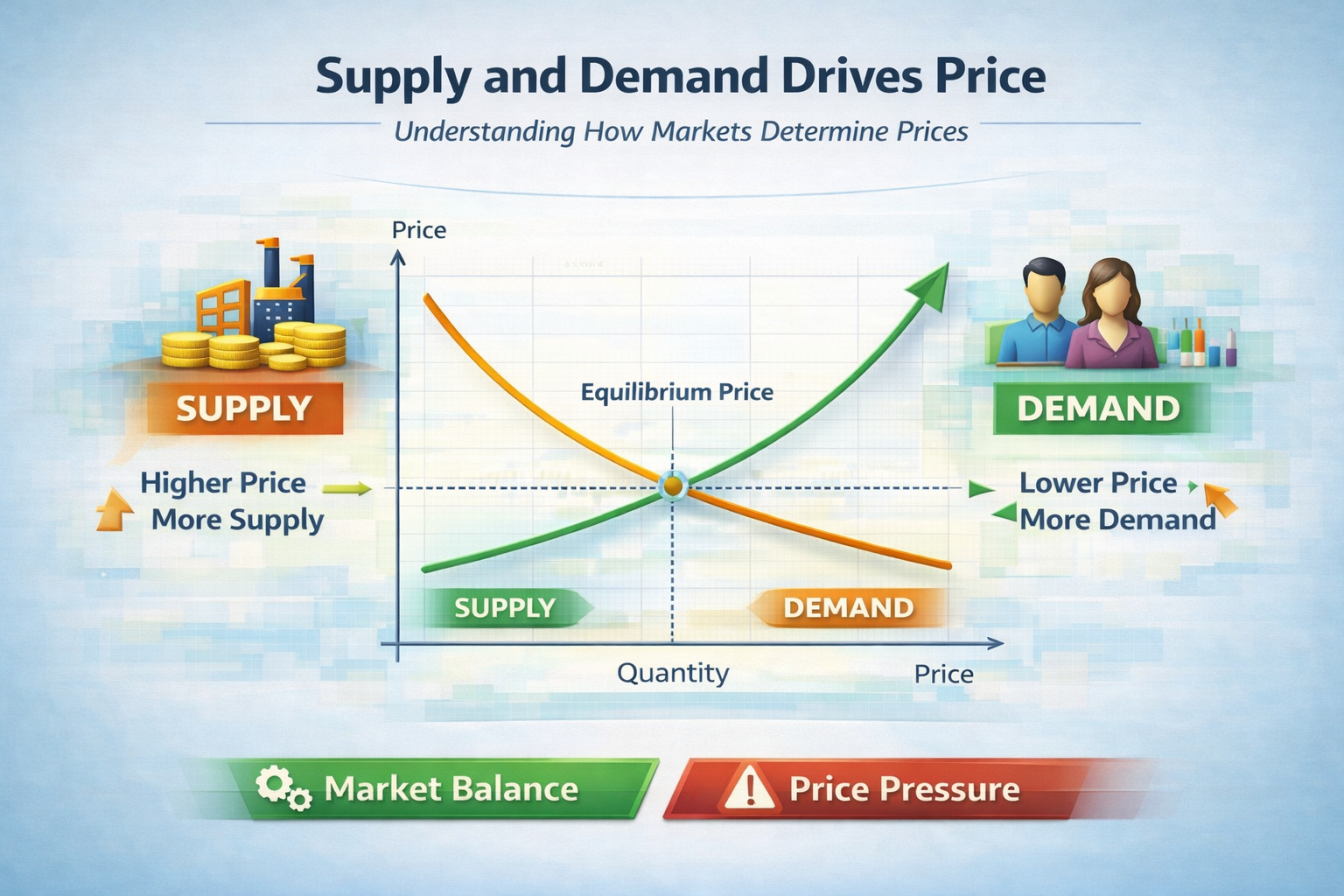
Step-by-Step Guide: How Supply and Demand Drives Price
- Understanding Supply:
- Supply means how much of something (product or service) is available in the market.
- When supply is high (plenty available), prices tend to be lower since sellers compete for buyers.
- When supply is low (scarce products), prices go up as buyers compete to get some.
- Understanding Demand:
- Demand means how much people want a certain good or service.
- When demand is high (lots of people want it), prices rise because sellers know buyers are eager.
- When demand is low (few people interested), sellers may lower prices to attract customers.
- The Balance (Equilibrium Price):
- Price moves up or down until supply and demand are equal, called “equilibrium.”
- This is the price where everyone who wants to buy can, and sellers can sell all their products.
- Real-life Example:
- Imagine strawberries during summer are plentiful (high supply) and reasonably priced.
- In winter, strawberries are scarce (low supply), so prices go up because people still want them (demand).
Advantages of Understanding Supply and Demand Drives Price
- Helps Make Better Decisions: You know when is a good time to buy or sell products or investments.
- Market Predictability: Understanding trends makes you less likely to overpay or panic during price swings.
- Wide Applications: Works for groceries, housing, investing, and business decisions.
Disadvantages
- Sudden Changes: Unexpected events (like bad weather or news) can quickly disrupt supply or demand, causing price spikes or drops.
- Doesn’t Account for All Factors: Sometimes, emotions or external controls (like government price limits) affect prices too.
Alternative Investment Options
- Fixed Rate Investments: Such as government bonds, which are less affected by quick supply-demand swings.
- Diversified Mutual Funds: Spread your money across many sectors to reduce the impact of price changes in any one area.
- Real Estate Investment Trusts (REITs): For those wanting property investments that might respond differently to supply and demand factors.
Beginner’s Tips
- Stay Informed: Read news or use price tracking apps for items or markets you’re interested in.
- Think Ahead: If you notice supply is about to change (like harvest seasons), plan your purchases or investments accordingly.
- Start Small: Try applying these ideas first with everyday shopping before moving to bigger investments.
Advanced Variations for Experienced Traders
- Technical Analysis: Use past price data and charts to predict how supply and demand will affect future prices.
- Hedging Strategies: Experienced investors use techniques to lessen the risks from price fluctuations caused by unexpected changes in supply or demand.
- Leverage Global Trends: Watch world events (like oil supply changes) that can drive prices across multiple markets.
FAQs About Supply and Demand Drives Price
Q: What if supply and demand are equal?
A: When supply equals demand, you get the most stable, “fair” price. This is called the equilibrium price.
Q: Why do prices sometimes go up even when demand seems the same?
A: Other factors, like increased costs for the seller or disruptions in production, can also push prices up.
Q: Can I use supply and demand to predict investment prices?
A: Yes, but remember there are always outside influences. Use it as one of several tools for analysis.
Conclusion
Remember, the principle that supply and demand drives price is at the heart of how markets work. Whether you’re shopping or investing, understanding this concept helps you make smarter, more confident decisions—even when prices change unexpectedly. Keep learning, and you’ll be well on your way to mastering this vital economic rule.