Stock Exchanges: A Beginner’s Guide to NYSE, NASDAQ, and More
Introduction
If you've ever watched the news or a movie where fast-talking people shout over flashing numbers, you’ve seen a glimpse of stock exchanges like the NYSE and NASDAQ. But what really goes on there? Whether you’re an aspiring investor or just curious, understanding stock markets can be surprisingly straightforward—and can open doors to new financial opportunities.
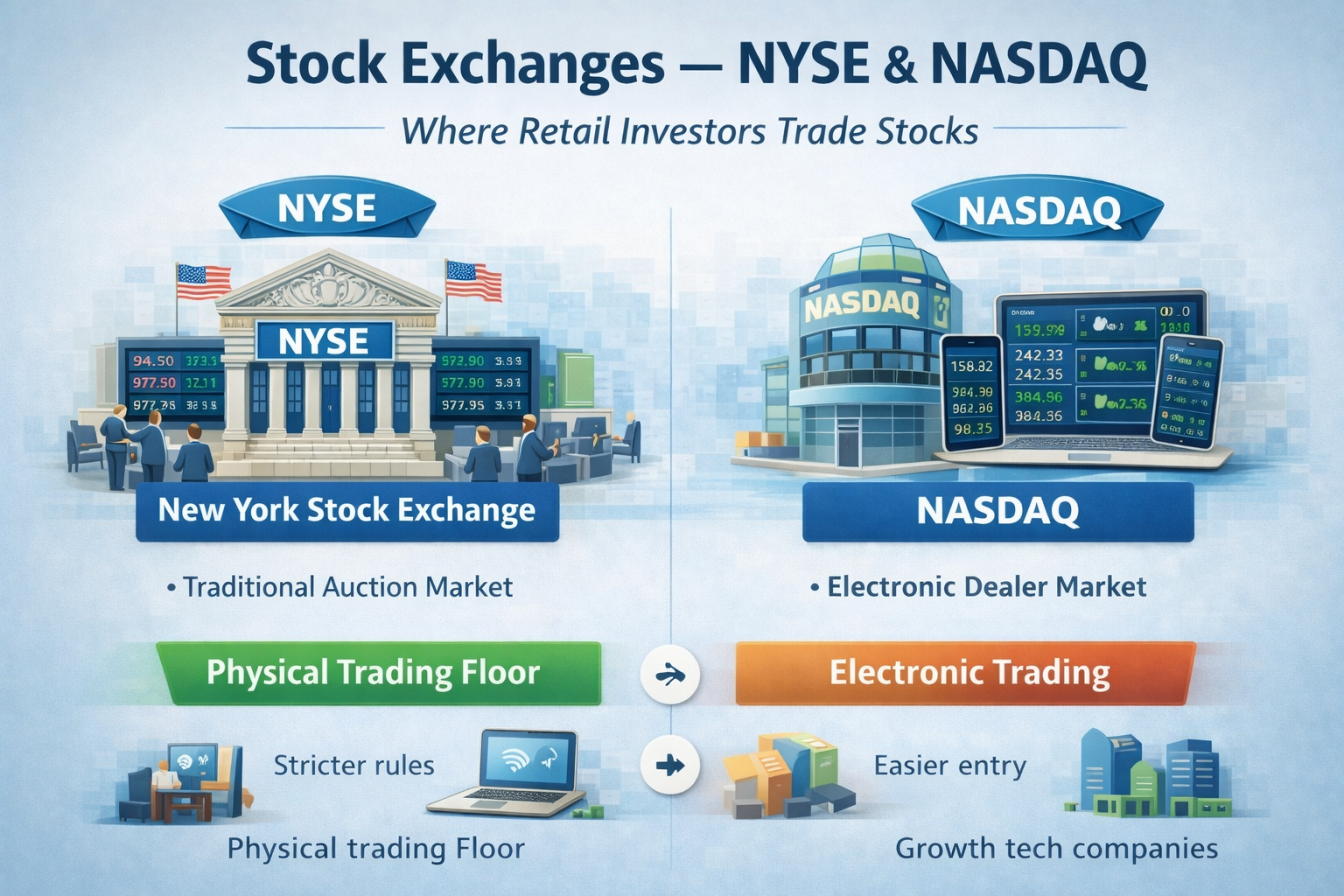
What is a Stock Exchange?
A stock exchange is a centralized place where investors buy and sell ownership shares of companies (known as "stocks"). It provides a safe, regulated environment for trading. The essence? Stock exchanges like NYSE (New York Stock Exchange) and NASDAQ connect companies who need to raise money with people who want to invest.
Relatable Hook: Ever dreamed of owning a tiny piece of your favorite brand? Thanks to stock exchanges, you actually can!
Step-by-Step Guide: How Stock Exchanges Work for Beginners
- Understand the Basics:
Stock exchanges like NYSE and NASDAQ are platforms where anyone with an internet connection can trade company shares.
- Open a Brokerage Account:
Choose a trusted online broker, sign up, and fund your account to access NYSE, NASDAQ, or similar exchanges.
- Research Stocks:
Use your broker’s tools to learn about companies, study trends, read news, and check out recent stock prices on the exchanges.
- Place a Trade:
Once you’ve chosen a stock (say, from the NASDAQ), decide how many shares you want to buy and order them through your brokerage’s website or app.
- Track Your Investments:
After buying, watch how your shares perform. You can buy and sell any time the exchanges (NYSE, NASDAQ) are open—usually weekdays, 9:30 am to 4 pm ET.
Breaking it down:
- NYSE is known for older, established companies (think Coca-Cola, IBM).
- NASDAQ features more technology-focused companies (such as Apple, Microsoft).
- Other stock exchanges include the London Stock Exchange (LSE) and Tokyo Stock Exchange (TSE).
Advantages of Stock Exchanges
- Transparency: All trades happen openly, with prices visible to everyone.
- Liquidity: You can usually buy or sell shares quickly without big price changes.
- Safety: Exchanges like NYSE and NASDAQ are closely regulated for fairness.
- Diversity: Thousands of companies to choose from, across many industries.
Disadvantages of Stock Exchanges
- Market Fluctuations: Prices can rise or fall sharply, sometimes for reasons beyond your control.
- Complexity: Can be confusing for absolute beginners—too many choices, too much jargon.
- Risk of Loss: Investments in stocks can lose value, especially in short-term trading.
Alternative Investment Options
Stock exchanges aren’t your only choice to grow your money. Consider:
- Mutual Funds: Pooled investments managed by professionals; great for beginners.
- ETFs (Exchange-Traded Funds): Like a bundle of stocks, bought and sold like a regular stock.
- Real Estate: Buy property for rental income or value growth over time.
- Bonds: Loans to companies or governments—usually safer, but with smaller returns.
Beginner’s Tips for Using Stock Exchanges
- Start small—invest only what you can afford to lose.
- Diversify—don’t put all your eggs in one basket (buy stocks from different sectors/exchanges).
- Do your research—read company news and financial reports.
- Avoid reacting emotionally to every market swing.
- Think long-term—the longer you hold quality stocks, the better your odds of seeing growth.
Advanced Variations for Experienced Traders
- Day Trading: Buy and sell stocks on the same day for quick profits.
- Short Selling: Profiting when you expect a stock’s price to drop (advanced and riskier).
- Options Trading: Bet on price movements—more complex, needs training.
- International Investing: Explore stock exchanges beyond NYSE and NASDAQ for global diversity.
Frequently Asked Questions (FAQ)
What is the difference between NYSE and NASDAQ?
NYSE typically lists more established, traditional firms, while NASDAQ is home to many tech and growth companies. Both are leading US stock exchanges.
Is it safe to buy stocks on stock exchanges?
Yes, major stock exchanges are regulated for investor protection, but investing always carries risks.
Can beginners invest in NYSE and NASDAQ?
Absolutely! Many beginner-friendly brokerage platforms let you start with small amounts.
How much money do I need to start investing?
Many brokers allow you to start with as little as $1, though it’s wise to start with at least $100 to diversify.
In summary: Stock exchanges like NYSE and NASDAQ are the backbone of the investing world, offering easy access for beginners and advanced tools for pros. Learn the basics, start small, and enjoy your investing journey!