Public vs. Private Companies: Understanding the Difference
Introduction
If you’ve ever watched the news or heard people discuss “stocks,” you may have wondered: What’s the difference between public and private companies? In simple terms, these are two ways businesses organize how they raise money and who can own a piece of them.
Public vs. private companies is a central topic in investing and business. They differ in ownership, how they raise money, and how easy it is for investors to buy and sell a piece of the business.
Essence: Public companies are open to everyone through the stock market, while private companies are owned by a select group. Let’s break down what that means and why it matters—especially if you’re taking your first steps into investing, business, or entrepreneurship.
Relatable Hook: Ever wondered why you can buy shares of Apple but not the neighborhood cafe? That’s the public vs. private difference!
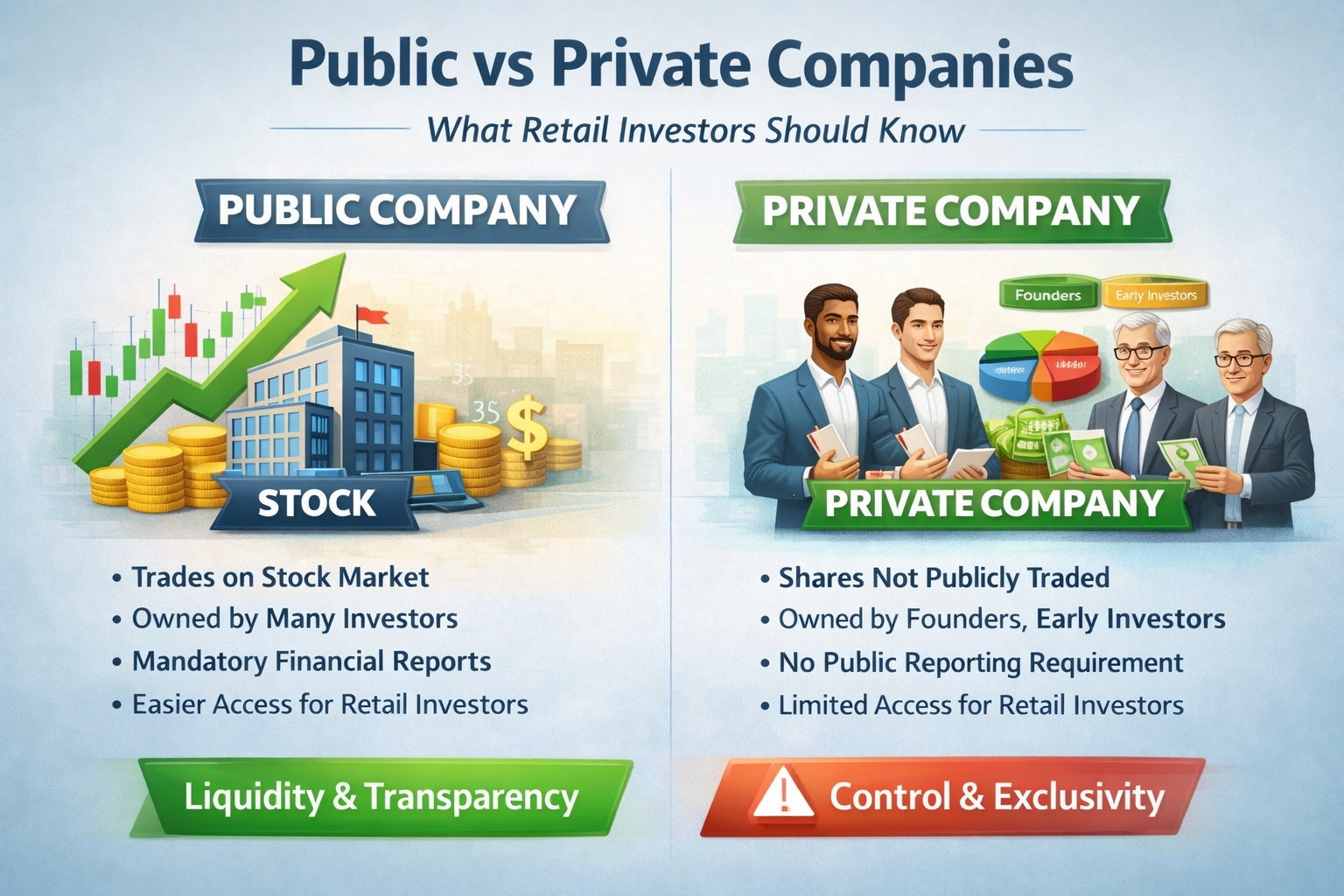
Step-by-Step Guide: Breaking Down Public and Private Companies
- Definition:
- Public company: A company that sells its stock (ownership shares) on a public stock exchange, like the NYSE or NASDAQ. Anyone can buy shares.
- Private company: Owned by founders, families, or a small group of investors. Their shares are not traded on public stock exchanges.
- How They Raise Money:
- Public companies raise money from the general public by selling shares. This is called an “IPO” or Initial Public Offering.
- Private companies raise money from private investors, banks, or venture capital. Their shares are not available to everyone.
- Ownership:
- In public companies, anyone from around the world can become an owner by buying a share.
- In private companies, ownership is limited to invited investors.
- Transparency:
- Public companies are required to share their financial information with the public, making them more transparent.
- Private companies can keep their finances and inner workings private.
- Regulation:
- Public companies must follow strict rules from government agencies (like the SEC in the U.S.).
- Private companies have fewer rules, and less paperwork to file.
Advantages of Public and Private Companies
- Public Companies:
- Easy to invest in: Anyone can buy and sell shares—often in seconds online.
- Liquidity: Investors can easily turn shares into cash by selling on the stock market.
- Transparency: Regular updates about finances and performance.
- Private Companies:
- More control: Owners can make decisions without needing approval from thousands of shareholders.
- Less regulation: Simpler paperwork and reporting requirements.
- Long-term focus: Less pressure from daily stock market swings.
Disadvantages of Public and Private Companies
- Public Companies:
- Expensive to start: Going public takes time and money.
- Less control: Founders might lose influence to big investors or the public.
- More scrutiny: All business moves are watched by regulators and the media.
- Private Companies:
- Harder to invest in: Everyday investors can’t usually buy in.
- Illiquid: It’s tough to sell your stake if you want your money back quickly.
- Limited capital: May be harder to raise large amounts of money.
Alternative Investment Options
- Mutual Funds & ETFs: Pooled investments that own shares in many public (and sometimes private) companies.
- Real Estate: Buy property directly or invest in real estate funds.
- Bonds: Loans you give to companies or governments.
- Startups and Crowdfunding: Some online platforms allow you to invest small amounts in private startups (but be cautious—these are risky).
Beginner’s Tips
- Start small—only invest what you can afford to lose.
- Stick to public companies at first—they’re easier to buy and sell, and have more information available.
- Read financial news and watch beginner videos to build your confidence.
- Diversify: Don’t put all your money into one company or sector.
- If you’re interested in private companies, learn about venture capital funds or startup platforms, but do deep research.
Advanced Variations (For Experienced Traders)
- Private Equity: Large investments in private companies, often to restructure them for growth.
- Pre-IPO investing: Some platforms allow wealthy individuals to buy shares in private companies before they go public.
- SPACs: “Special Purpose Acquisition Companies” are a trendy, alternative route for private companies to go public.
Frequently Asked Questions: Public vs. Private Companies
Can I buy shares in private companies?
Usually, only specific investors (like venture capitalists or insiders) can invest in private companies. Some new platforms allow limited access with restrictions.
Which is safer: public or private companies?
Public companies are generally safer for beginners because they’re regulated and share more information. Private companies can offer higher rewards, but come with more risk and less liquidity.
Why do companies go public or stay private?
Companies go public to raise large amounts of money quickly. They may stay private to keep control and avoid the pressures of the stock market.
How do I get started investing?
Open an account with a trusted brokerage and explore stock market investing in public companies. Learn slowly and be patient with your gains.