Bid, Ask, and Spreads: A Beginner-Friendly Explanation
Introduction
If you’ve ever peeked into stock trading or tried buying crypto, you may have heard the terms bid, ask, and spreads. Understanding these concepts is the key to making smart investment decisions and avoiding confusion or costly mistakes. At their core, these three terms help you see how much you can buy or sell something for, and how much it might cost you to do so.
Remember that nervous feeling before making your very first investment? It’s totally normal. You’re definitely not alone—every beginner has juggled with these numbers and wondered what they really mean. Let's demystify bid, ask, and spreads together, in plain English.
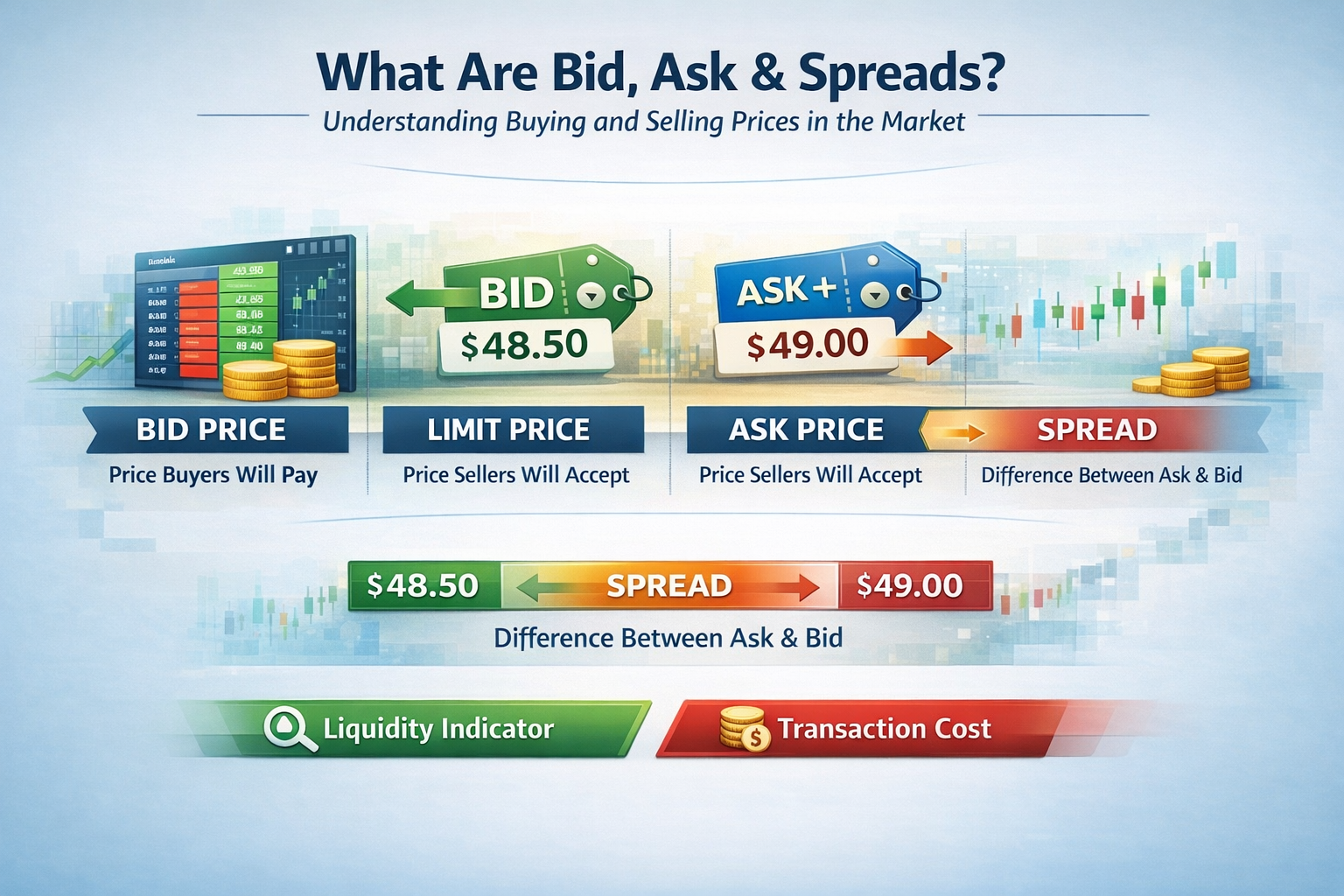
What is Bid, Ask, and Spread?
Bid is the price someone is willing to pay to buy an asset (like a stock or crypto).
Ask is the price at which someone is willing to sell that asset.
Spread is the difference between the ask price and the bid price.
Essence: Bid, ask, and spread help you see the “true cost” of buying or selling anything on the market.
Step-by-Step Guide: Understanding Bid, Ask, and Spreads
- Look up any stock or asset.
- You’ll see two key prices: the bid and the ask.
- Identify the Bid Price.
- This is the highest price buyers are currently willing to pay.
- Spot the Ask Price.
- This is the lowest price sellers are ready to accept.
- Calculate the Spread.
- Subtract the bid price from the ask price.
For example: if bid is $100 and ask is $101, spread = $1.
- Understand why spread matters.
- The spread is what market makers or brokers earn for “matching” buyers and sellers. It's also a hidden cost for you.
- Place your order.
- If you want to buy immediately, you’ll likely pay the ask price.
If you want to sell immediately, you’ll get the bid price.
- Watch market activity.
- Highly traded assets usually have a smaller spread, making them cheaper to buy and sell.
Advantages of Understanding Bid, Ask, and Spreads
- Clarity: You know the real buying and selling costs.
- Control: Helps you set better buy or sell prices.
- Saves Money: Small spreads mean less “hidden” fees.
- Faster Decisions: You place smarter trades with confidence.
Disadvantages (Potential Cons)
- Hidden Costs: Large spreads can increase your trading costs, especially for rarely traded (illiquid) assets.
- Slower Execution: For assets with large spreads, your order might not fill instantly at your desired price.
Alternative Investment Options
- Mutual Funds: You buy or sell at the day's ending price (no bid-ask spread to worry about).
- Index Funds: Lower trading activity; simple to understand pricing.
- Robo-Advisors: Automatically manage your investments—bid, ask, and spreads are handled for you.
- Fixed Deposits or Bonds: Usually, you get a fixed interest and don’t deal with real-time buying/selling prices.
Beginner’s Tips
- Always check the spread before making a trade, especially for less common stocks or assets.
- Practice with a demo or “paper trading” account to get comfortable before using real money.
- Start with assets that have a low spread—these are usually safer and cheaper for beginners.
- Don’t panic if prices move quickly; focus on your plan rather than chasing pennies.
Advanced Variations for Experienced Traders
- Limit Orders: Experienced traders use these to set their exact buy or sell price, often getting better deals within the spread.
- Trading Illiquid Assets: Advanced traders might try to profit from large spreads by “market making” themselves.
- Analysis Tools: Some use real-time data to watch spreads and predict price changes.
- High-Frequency Trading: Specialized traders build algorithms to profit off frequent, tiny changes in spreads.
Frequently Asked Questions (FAQs)
Q: What does a tight (small) spread mean?
A: It means buyers and sellers mostly agree on price, and it’s usually a sign of a healthy, active market.
Q: Why do some stocks have huge spreads?
A: Usually because there’s not much trading going on, so buyers and sellers can’t easily agree on a price.
Q: Does the spread change all the time?
A: Yes! Spreads can change every second, depending on market activity and interest in the asset.
Conclusion
Bid, ask, and spreads are simple but powerful ideas. Knowing how they work helps you become a smarter investor, avoid painful mistakes, and make your money work harder. Start small, keep learning, and watch your confidence grow with every trade. Happy investing!