Trader Psychology: Discipline, Avoiding FOMO, and Handling Losses
Introduction
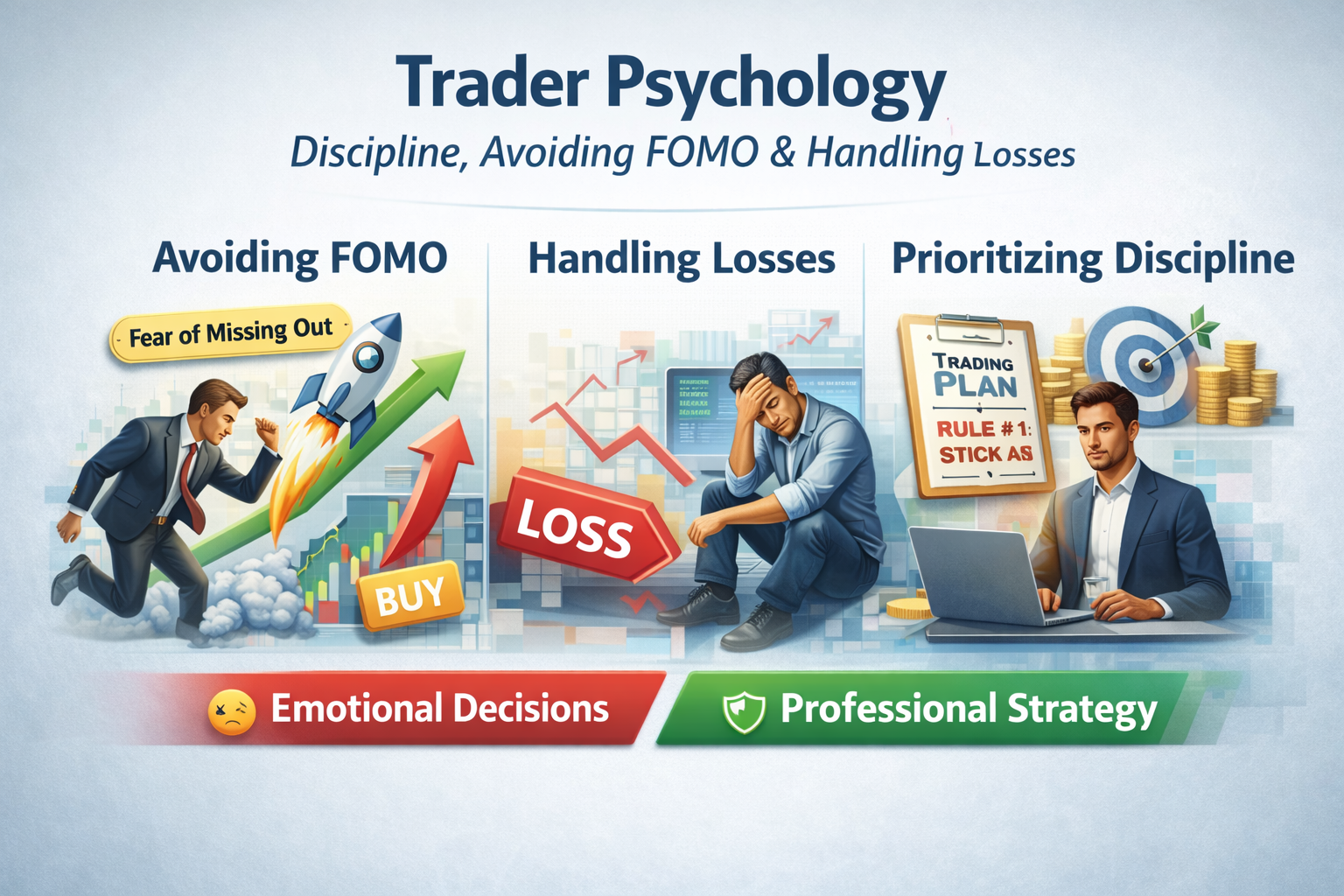
Trader psychology plays a crucial role in successful investing. It involves mastering your thoughts and emotions while trading. In essence, trader psychology means staying disciplined, not getting swept up in FOMO (Fear of Missing Out), and knowing how to handle losses with a clear mind.
If you're just starting out, it's easy to let emotions steer your trading decisions—who hasn’t felt the urge to jump into a skyrocketing stock or panic after a loss? Learning how to manage these feelings can spell the difference between long-term success and frustration.
What is Trader Psychology?
Trader psychology refers to the mental state and emotions that influence your trading decisions. The heart of trader psychology is discipline—being able to stick to a strategy, withstand the lure of hype (FOMO), and keep calm under pressure after setbacks. For beginners, it simply means not getting carried away by hope or fear when making trades.
Step-by-Step Guide: Building Good Trader Psychology
- Set Clear Trading Rules
Decide in advance when to enter or exit a trade. Write this down. Stick to your rules even if you’re tempted to change them in the heat of the moment.
- Understand What Drives You
Notice when you feel anxious or excited while trading. Ask, “Am I making this choice based on my plan, or based on emotion?”
- Recognize FOMO
FOMO, or Fear of Missing Out, is the urge to chase after a stock just because others are buying. When you feel it, pause. Remember, the goal is steady progress—not fast wins.
- Accept and Learn from Losses
No trader wins every time. Accepting that losses are part of the process helps you move on quickly, review what happened, and avoid repeating mistakes.
- Keep a Trading Journal
Record your trades, feelings, and results. Over time, you’ll notice patterns in your decisions and emotions, helping you grow as a trader.
- Practice Patience and Consistency
The best traders succeed by making many disciplined decisions over time—not looking for one big score.
Breaking Down Trader Psychology in Detail
- Discipline: This means sticking to your trading plan despite temptations. For example, don’t buy a stock just because it’s trending if it doesn’t fit your strategy.
- Avoiding FOMO: FOMO can lead to chasing after investments at bad prices. Staying mindful and resisting this urge is key to good trader psychology.
- Handling Losses: Losses hurt, but they are normal in trading. Focus on what you can learn from them rather than beating yourself up.
Advantages of Good Trader Psychology
- Improved decision-making: Less emotional, more logical choices.
- Better risk management: You’re less likely to over-invest or panic sell.
- Consistency: Increases your chances of long-term success.
- Reduced stress: Helps you stay calm, even in volatile markets.
Disadvantages (if Any)
- Developing strong trader psychology takes time and self-awareness; it can't be built overnight.
- Even seasoned traders can occasionally fall into emotional traps, especially during major market swings.
Alternative Investment Options
- Index funds or ETFs: Invest in a broad mix of stocks for lower risk and less emotional decision-making.
- Robo-advisors: Let automated tools manage your investments based on your preferences.
- Real estate: Consider passive investments, such as REITs, which don’t require frequent trading decisions.
- Fixed deposits or bonds: Lower risk, less emotional involvement.
Beginner's Tips for Trader Psychology
- Start small—trade only what you can afford to lose.
- Focus on learning, not just earning.
- Take breaks—don’t watch the markets all day.
- Talk to other traders; sharing experiences helps.
- Use stop-losses to help manage risk automatically.
Advanced Variations for Experienced Traders
- Develop mindfulness techniques (like meditation) to calm your mindset during high-pressure trades.
- Create or refine an algorithmic trading strategy to remove emotions from decision-making.
- Experiment with advanced journaling, such as tracking triggers for emotions and how they impact returns.
- Regularly review trading psychology books or workshops to stay sharp.
FAQs on Trader Psychology
Q: Why is trader psychology important?
A: Trader psychology is crucial because emotions can lead to poor decisions, especially with money at stake. It’s as important as any trading strategy.
Q: How can I avoid FOMO in trading?
A: Always trade with a plan, stick to your strategy, and remind yourself that missing one trade is better than entering a risky one.
Q: How do I handle trading losses?
A: Accept losses as part of the journey, review your decisions, and avoid revenge trading. Focus on long-term growth.
Q: Can anyone develop discipline as a trader?
A: Yes, with practice and self-awareness, anyone can get better at controlling emotions and sticking to a plan.
Mastering trader psychology—staying disciplined, overcoming FOMO, and learning from losses—will help you build a strong foundation for trading success, whether you're just beginning or refining your skills.