Stop Losses and Targets: A Beginner’s Guide
Introduction
Whether you're just starting to trade or looking to sharpen your investment strategies, understanding stop losses and targets can make a huge difference. These are essential tools for risk management in trading, helping you protect your money and stick to your goals.
Imagine having a safety net that locks in your profits and limits your losses — that’s the magic of stop losses and targets!
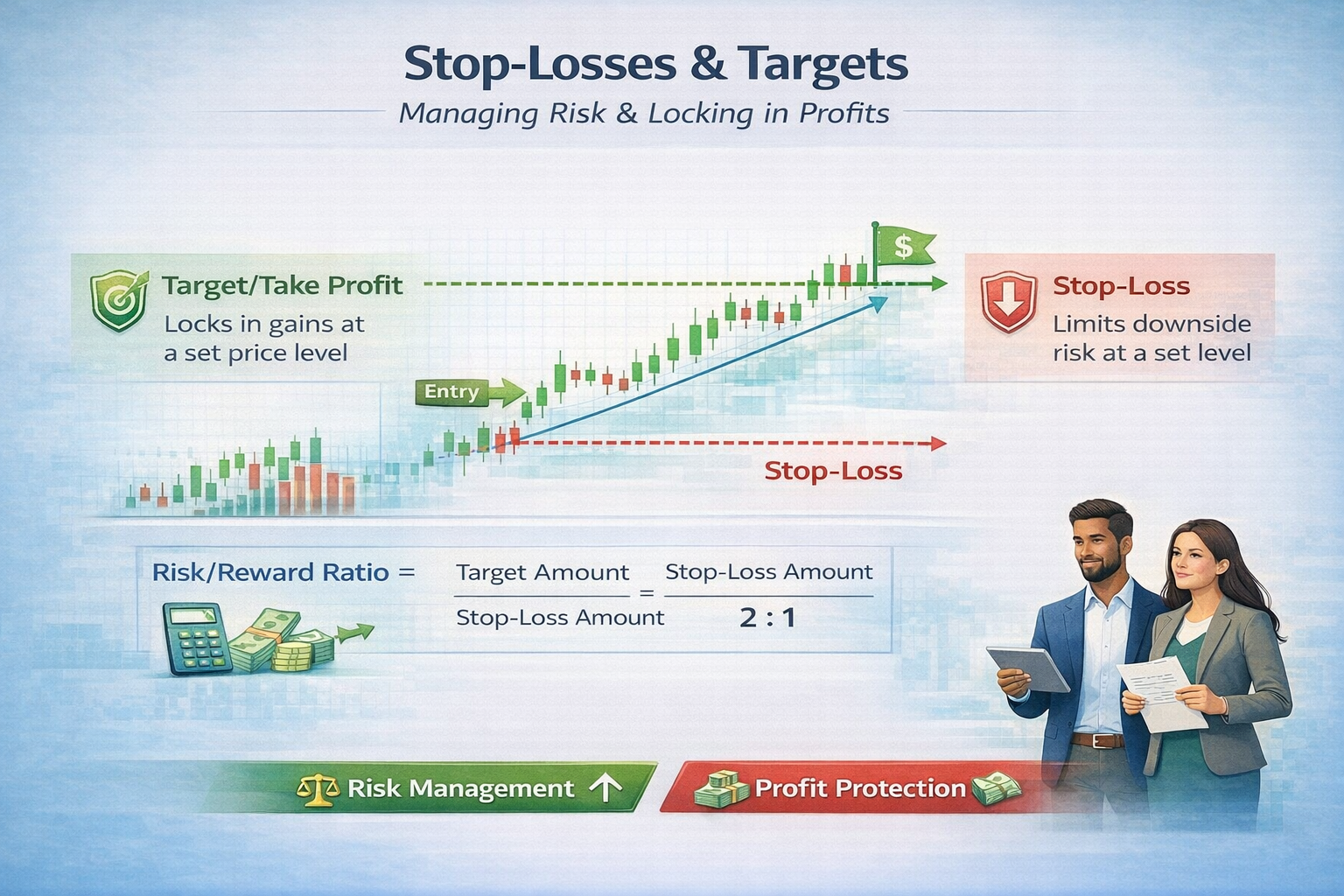
What Are Stop Losses and Targets?
- Stop loss: An order set to automatically sell your asset if its price drops to a certain level, to limit your loss.
- Target (Take Profit): An order set to automatically sell when your asset’s price hits your profit goal.
Essence: Stop losses prevent big losses; targets help you capture profits. Both bring clarity and discipline to your trading decisions.
Relatable hook for beginners: Just like wearing a seatbelt while driving, stop losses and targets help keep your trading journey safer!
Step-by-Step Guide to Using Stop Losses and Targets
- Determine Your Risk:
- Decide how much you are comfortable losing per trade (commonly 1-2% of your capital).
- Set Your Stop Loss:
- Pick a price where you will exit the trade if the market goes against you.
- Usually just below a support level or above a resistance level.
- Establish Your Target:
- Decide your ideal profit goal — where you’d like to sell if the price moves in your favor.
- Set a realistic target based on past price movements or technical analysis.
- Place Your Orders:
- Enter your trade with both stop loss and target (take profit) orders in your trading platform.
- Stick to the Plan:
- Don’t move your stop loss out of fear or greed. Consistency is key.
Tip: Write down your plan before trading so you avoid emotional decisions in the heat of the moment.
In-Depth: Stop Losses and Targets Explained
- Why use stop losses? They protect you from unexpected downturns and prevent small mistakes from becoming disasters.
- Why use targets? They help you secure profits and avoid the common mistake of holding too long and losing gains.
- Emotion Control: Knowing your exits in advance keeps you calm and focused.
- Discipline: Consistently using these tools helps build strong trading habits.
Advantages of Stop Losses and Targets
- Risk management: Limit losses on any single trade.
- Profit protection: Help you exit at your desired profit point.
- Reduced stress: Automatic orders mean you don’t have to watch markets 24/7.
- Removes emotions: Stops greed and fear from hijacking your plan.
- Works for all: Useful in stocks, forex, crypto, and more.
Disadvantages of Stop Losses and Targets
- Market gaps: In fast-moving markets, prices can skip your stop loss point, leading to bigger losses than planned.
- Premature exits: A price may hit your stop loss or target and quickly reverse, making you miss out on bigger gains.
- Over-reliance: Blindly setting stops/targets without understanding market context can lead to poor results.
Alternative Investment Options
- Investing in index funds: Less need for active management or stop losses due to diversification.
- Mutual funds: Professional management and lower risk of sudden losses.
- Robo-advisors: Automated investment strategies that help manage risk without manual orders.
- Dollar cost averaging: Invest a fixed amount regularly, reducing the impact of market volatility.
Beginner’s Tips
- Start with paper trading (practice without real money).
- Use small position sizes as you learn.
- Review your trades regularly — learn from both wins and losses.
- Avoid moving stop losses wider after entering a trade — stick to your plan.
- Keep it simple — over-complicated strategies are hard to manage.
Advanced Variations for Experienced Traders
- Trailing stop losses: These adjust upwards (for buys) as the price rises, locking in more profit automatically.
- Partial profit targets: Take some profit off the table at one level, and let the rest ride to a higher target.
- Dynamic stop loss: Adjust your stop loss based on volatility or chart patterns, not a fixed amount.
- Bracket orders: Enter a trade with pre-set stop loss and take profit attached — all managed automatically.
Frequently Asked Questions (FAQs)
Q: Do I need both a stop loss and target for every trade?
A: It's highly recommended to use both to clearly define your risk and reward.
Q: What percentage should my stop loss be?
A: Most traders risk 1-2% of their account per trade, but it depends on your comfort and strategy.
Q: Why did my stop loss not trigger at the exact price I set?
A: Sometimes, fast-moving markets “gap” past your stop. This is known as slippage.
Q: Can I change my stop loss and target during a trade?
A: Yes, but frequent adjustments can lead to emotional decisions and undermine your plan.