Growth vs. Value Stocks: Which Is Right for You?
Introduction
When you begin investing, one of the first questions you'll encounter is: Should I buy growth stocks or value stocks? This key decision can shape your returns, risk levels, and experience in the stock market.
Growth vs. value stocks is all about choosing between companies expected to expand rapidly (growth) or those seen as bargains, perhaps overlooked but fundamentally strong (value).
If you've ever wondered why some stocks soar while others quietly chug along, this guide breaks it all down for beginners. No jargon—just clear, practical advice.
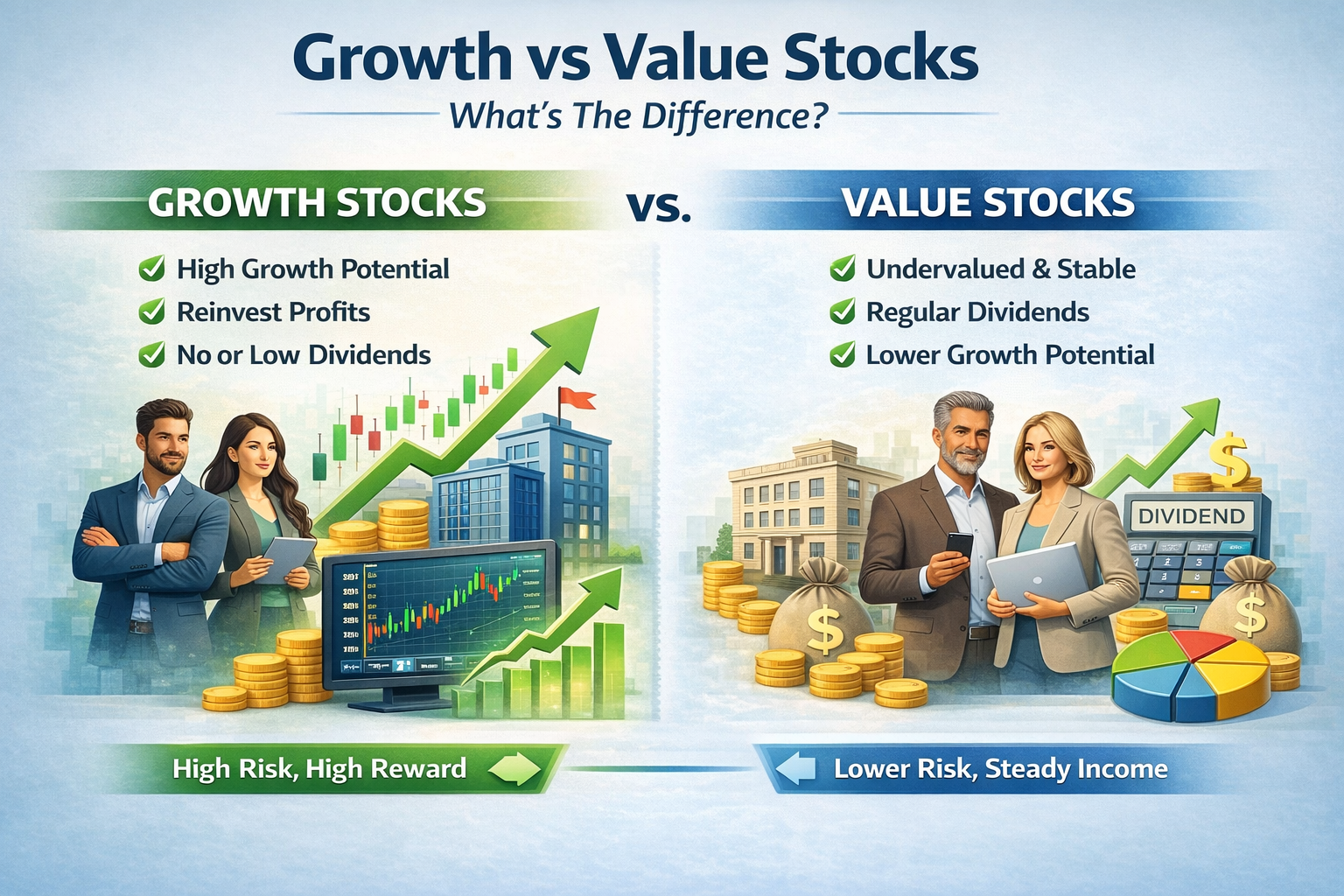
What Are Growth and Value Stocks?
Growth stocks are shares in companies with exceptional potential to increase sales and profits faster than average. Think of tech innovators like Apple or Tesla—always aiming higher.
Value stocks are shares of companies believed to be undervalued by the market. These are businesses that might be out of the spotlight but have solid foundations. Their prices are lower compared to what the company's assets and earnings justify.
- Essence: Growth stocks = excitement and rapid potential; Value stocks = stability and hidden bargains.
Imagine choosing between a race car (growth) and a reliable family sedan (value). Both get you to your goal—just in different ways.
{C}
Step-by-Step Guide: Understanding Growth vs. Value Stocks
- Know Your Goals: Are you seeking high returns fast or steady wealth over time?
- Identify Growth Stocks:
- Look for companies with recent high sales and earnings growth (over 15% per year).
- Popular in industries like technology, biotech, and e-commerce.
- Often reinvest profits instead of paying dividends.
- Spot Value Stocks:
- Check for low ratios (like P/E or Price-to-Book) compared to competitors.
- Look in mature industries (banks, energy, consumer goods).
- May offer attractive dividends and steady but slower growth.
- Compare Risk Levels:
- Growth stocks tend to be riskier and more volatile.
- Value stocks are generally less volatile, but can stay undervalued for a long time.
- Diversify: Most investors mix both styles for balanced performance.
{C}
Breaking Down Growth vs. Value Stocks
- Growth Stocks:
- Focus on future potential and high revenue growth.
- Prices often appear "expensive" by traditional metrics.
- Little to no dividends paid.
- Example: Tech companies in emerging fields.
- Value Stocks:
- Focus on current value and financial stability.
- May have temporary challenges causing low stock prices.
- Often pay dividends to shareholders.
- Example: Well-established businesses facing a rough patch in the news.
{C}
Advantages of Growth vs. Value Stocks
- Growth Stocks:
- Potential for large price gains.
- Chance to invest in the next "big thing."
- Value Stocks:
- Lower risk due to stable business models.
- Often pay consistent dividends.
- Room for price increases if the market recognizes their true value.
{C}
Disadvantages of Growth vs. Value Stocks
- Growth Stocks:
- Can be very volatile—prices swing up and down quickly.
- Success depends on continued rapid growth. If that slows, prices can drop sharply.
- No or low dividend payouts—returns depend on stock price appreciation.
- Value Stocks:
- May take a long time to "unlock" their value.
- Could be cheap for a reason—troubled businesses or changing industries.
- Lower growth potential compared to high-flying growth stocks.
{C}
Alternative Investment Options
- Index Funds: Own both growth and value stocks in a single, diversified package.
- Dividend Stocks: Invest in companies known for reliable, high dividends.
- ETFs (Exchange-Traded Funds): There are ETFs that focus specifically on growth or value strategies, or blend both.
- Mutual Funds: Choose professionally managed funds targeting growth, value, or a balanced approach.
Beginner’s Tips: Growth vs. Value Stocks
- Start small—try a little of each strategy to see what fits your comfort level.
- Don’t put all your eggs in one basket—diversify between sectors and styles.
- Review your choices annually—the growth vs. value balance can shift as you gain experience or your goals change.
- Use ETFs or index funds for easier diversification as a beginner.
Advanced Variations for Experienced Investors
- Rotate between growth and value strategies based on economic trends (e.g., growth during tech booms, value during recoveries).
- Use stock screening tools to apply advanced valuation metrics (e.g., PEG ratio, free cash flow yield).
- Mix international growth and value stocks for global diversification.
- Consider factor investing—allocating based on specific style exposures and analytics.
FAQs: Growth vs. Value Stocks
Q: Should I choose growth or value stocks as a beginner?
A: Many experts suggest beginners hold a mix of both, often through mutual funds or ETFs. This reduces risk and gives you a taste of each style.
Q: Which performs better—growth or value?
A: It depends on the market cycle. Growth often wins during booms; value can outperform during recoveries. Over long periods, both styles have shown strong returns.
Q: How do I know if a stock is “growth” or “value”?
A: Check its earnings growth rate and stock ratios (like P/E). Also, review its industry and analyst reports for guidance.
Q: Can I switch between growth and value investing?
A: Yes! Many investors "rebalance" their portfolios each year to match changing goals and market trends.
Conclusion: Growth vs. Value, Your Path Starts Here
Understanding Growth vs. Value Stocks is key to building investment confidence. By knowing their differences, pros, and cons, you can choose the best fit for your goals and personality. Keep learning, start small, and remember—there's room for both growth and value strategies in your financial journey!