Introduction
Ever wondered how companies reward their shareholders? Dividends, buybacks, and shareholder yield are three key ways. Simply put, these are methods for companies to share profits with their investors.
If you’re just starting out in the world of investing, these terms might sound confusing—but don’t worry! Here’s a simple breakdown to get you confident about these important concepts.
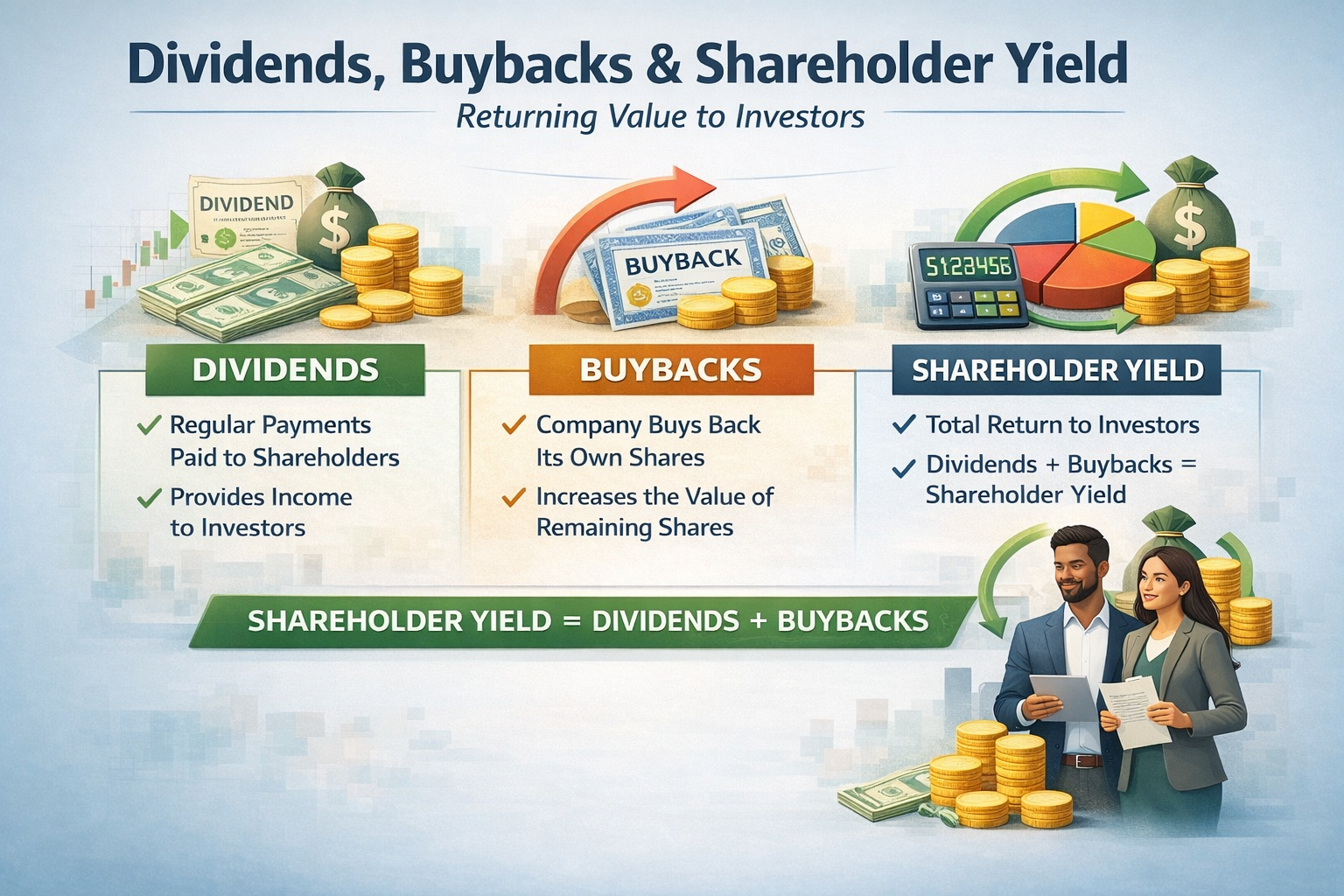
What Are Dividends, Buybacks, and Shareholder Yield?
- Dividends: Regular cash payments made to shareholders—think of it as your “thank you” for owning a part of the company.
- Buybacks: When a company repurchases its own shares. This reduces the number of shares available and often increases each remaining share’s value.
- Shareholder Yield: A broader measure combining dividends, buybacks, and some debt reductions. It shows the total returned to shareholders.
Essence: These are ways companies give back to investors, boosting your returns and sometimes the price of your shares.
Step-by-Step Guide
- Learn the Basics: Know what each term means. Dividends are direct cash payments. Buybacks are company-driven share reductions. Shareholder yield is a mix of these returns.
- Check Company Announcements: Visit investor relations pages to track dividend declarations and buyback programs.
- Understand the Payment Process: Dividends are typically paid quarterly. Buybacks happen over months or years, not all at once.
- Review the Numbers: Look for dividend yield (dividend per share/price) and total shareholder yield in financial reports.
- Compare with Alternatives: How do these returns measure up against just holding the stock or choosing other investment types?
Advantages
- Regular Income: Dividends provide steady payouts—great for retirees or those wanting passive income.
- Potential for Higher Share Prices: Buybacks can raise the price of remaining shares by reducing supply.
- Total Reward: Shareholder yield gives a clearer picture of all value returned to you.
Disadvantages
- Inconsistent Payments: Some companies cut dividends in tough times, leaving you without income.
- Questionable Buybacks: Not all buybacks are good—companies sometimes overpay or use them to hide weak performance.
- Tax Considerations: Dividends are usually taxable, depending on where you live and your account type.
Alternative Investment Options
- Growth Stocks: Focus on price appreciation rather than direct returns like dividends or buybacks.
- Bonds: Provide fixed interest payments, another form of steady income.
- Exchange-Traded Funds (ETFs): Some combine growth, dividends, and buybacks for balanced returns.
Beginners’ Tips
- Start with companies with a history of reliable dividends and sensible buybacks.
- Don’t just chase high yields—sometimes it signals risk.
- Use free online tools to track dividend and shareholder yield data.
Advanced Variations for Experienced Investors
- Analyze how shareholder yield affects overall returns, including reinvested dividends.
- Consider global stocks with different payout policies.
- Look for undervalued companies with strong buyback strategies.
FAQs about Dividends, Buybacks, and Shareholder Yield
- Is shareholder yield better than dividend yield?
- It’s broader. Shareholder yield includes both dividends and buybacks, offering a more complete picture of returns.
- Are buybacks the same as dividends?
- No. Buybacks increase your proportional ownership but don’t put cash directly in your pocket like dividends do.
- What if a company does neither?
- They might be reinvesting in growth instead. This isn’t always bad, especially for younger or fast-growing companies.