Position Sizing by Volatility (ATR, Beta): A Beginner’s Guide
Introduction
Effective risk management is the backbone of successful trading. Position sizing by volatility—especially using indicators like ATR (Average True Range) and beta—is a smart way to control your investment size based on how much a security moves. In essence, it’s about adjusting your buy or sell amounts to match the security’s risk, making your trades safer and smoother.
If you’ve ever wondered, “How much should I invest in this trade?” or “How do I avoid unexpected losses?”—then learning position sizing by volatility is a crucial next step. Let’s break it down together, step by step.
What is Position Sizing by Volatility?
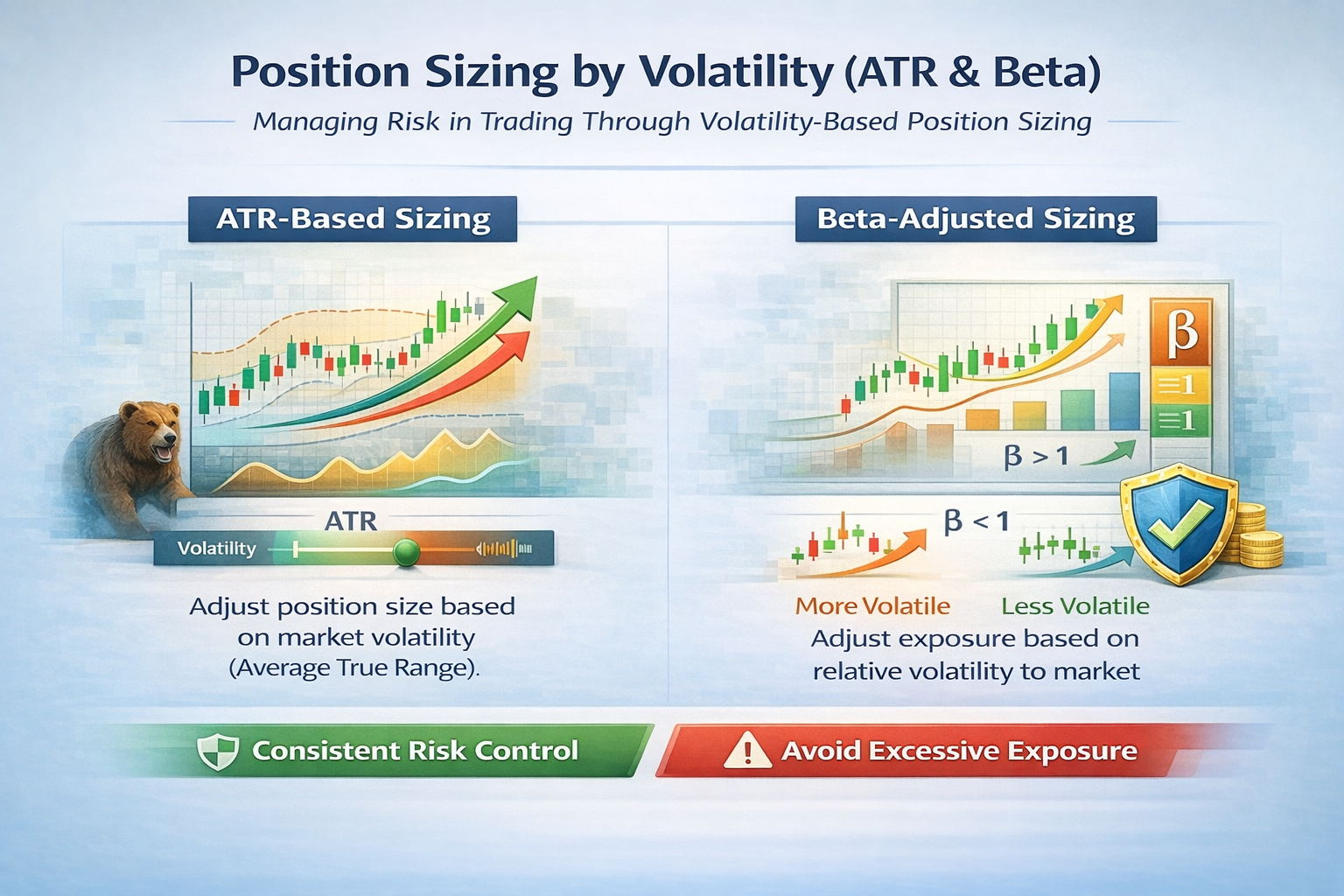
Position sizing by volatility is a strategy where you decide how much of an asset to buy or sell based on how much its price fluctuates. The goal: keep your risk consistent, no matter what you trade. This approach uses metrics like ATR (Average True Range) to measure daily price swings, or beta, which shows how much a stock moves compared to the overall market.
- ATR: Tells you how much on average the price moves each day.
- Beta: Tells you how volatile a stock is compared to the market.
For beginners, think of it like adjusting your walking speed based on how rocky the path is—safer on smooth ground, more careful on rough terrain!
Step-by-Step Guide: Position Sizing by Volatility (ATR, Beta)
- Determine Your Risk Per Trade
Decide what percent of your capital you are willing to risk on a single trade. Many beginners start with 1-2%. For instance, with $10,000, risking 1% means a max loss of $100 per trade.
- Calculate Volatility
- For ATR: Check your charting tool or trading platform for the stock’s ATR (Average True Range).
- For beta: Find the stock’s beta value in financial data sites.
Example: ATR is $2.00; beta is 1.2.
- Set Your Stop-Loss
Place a stop-loss order based on volatility. With ATR, you might set your stop 1 ATR below your entry. Example: Buying at $50; ATR = $2; stop-loss at $48.
- Calculate Position Size
- Based on ATR:
Position Size = Risk Amount / ATR
E.g., $100 risk / $2 ATR = 50 shares
- Using beta (for portfolios): Normalize your position sizes by dividing your risk among stocks with similar beta, so you’re not over-exposed to volatile stocks.
- Place Your Trade
Buy or sell the calculated number of shares. Adjust in real time if volatility changes.
Advantages of Position Sizing by Volatility
- Risk Control: Every trade risks a known, manageable amount.
- Consistency: Losing trades won’t wipe you out; you can stay in the game longer.
- Adaptability: Works well in choppy and trending markets—your exposure changes automatically.
- Reduces Emotional Trading: Having a plan reduces impulsive mistakes.
Disadvantages of Position Sizing by Volatility
- Can Reduce Profits: In low-volatility periods, you might trade smaller positions, limiting gains.
- Requires Accurate Data: Need reliable ATR and beta values for best results.
- Market Gaps: Sudden price jumps can still cause larger-than-expected losses.
Alternative Investment Options
- Fixed-Dollar Position Sizing: Invest the same amount each trade, regardless of volatility.
- Value-at-Risk (VaR): Uses statistical models to set position sizes.
- Kelly Criterion: A mathematical formula for sizing bets based on win probability.
- Diversification: Spread funds across multiple uncorrelated assets.
Beginner’s Tips
- Start small: Practice with a demo account or small amounts before going big.
- Track your trades: Keep a journal to spot mistakes and improvements.
- Stick to the plan: Don’t adjust your position mid-trade based on fear or greed.
- Always use stop-loss orders as intended.
- Review volatility data regularly; markets change fast!
Advanced Variations for Experienced Traders
- Dynamic ATR Periods: Adjust your ATR period (e.g., 7-day vs. 14-day) to suit market conditions.
- Volatility Scaling: Combine ATR and beta for a “volatility index” to size positions with even more precision.
- Portfolio Volatility Targeting: Use volatility across the entire portfolio instead of single trades.
- Automated Position Sizing: Implement position sizing algorithms in your trading software or script.
Frequently Asked Questions (FAQs)
- Is position sizing by volatility good for beginners?
- Yes—once you learn the basics, it’s a safer way to control risk and build discipline.
- Can I use ATR and beta together?
- Absolutely! Many traders combine them for more accurate position sizing.
- What’s the difference between ATR and beta?
- ATR measures an individual asset’s price range; beta compares a stock’s movement to the wider market.
- Does position sizing guarantee profits?
- No, but it helps preserve capital and avoid large losses, which is key to long-term success.