Market Cycles: Bull vs. Bear, Corrections, Recessions
Introduction
The world of investing is filled with ups and downs. Market cycles—which include bull and bear markets, as well as corrections and recessions—play a crucial role in shaping the direction of your investments.
At its core, understanding market cycles means knowing why markets rise and fall, so you can make smarter investment choices.
If you're new to investing, reading news about stocks "crashing" or "soaring" can feel overwhelming. Don't worry—this guide will explain market cycles in simple, everyday language, so you can invest with more confidence.
What Are Market Cycles?
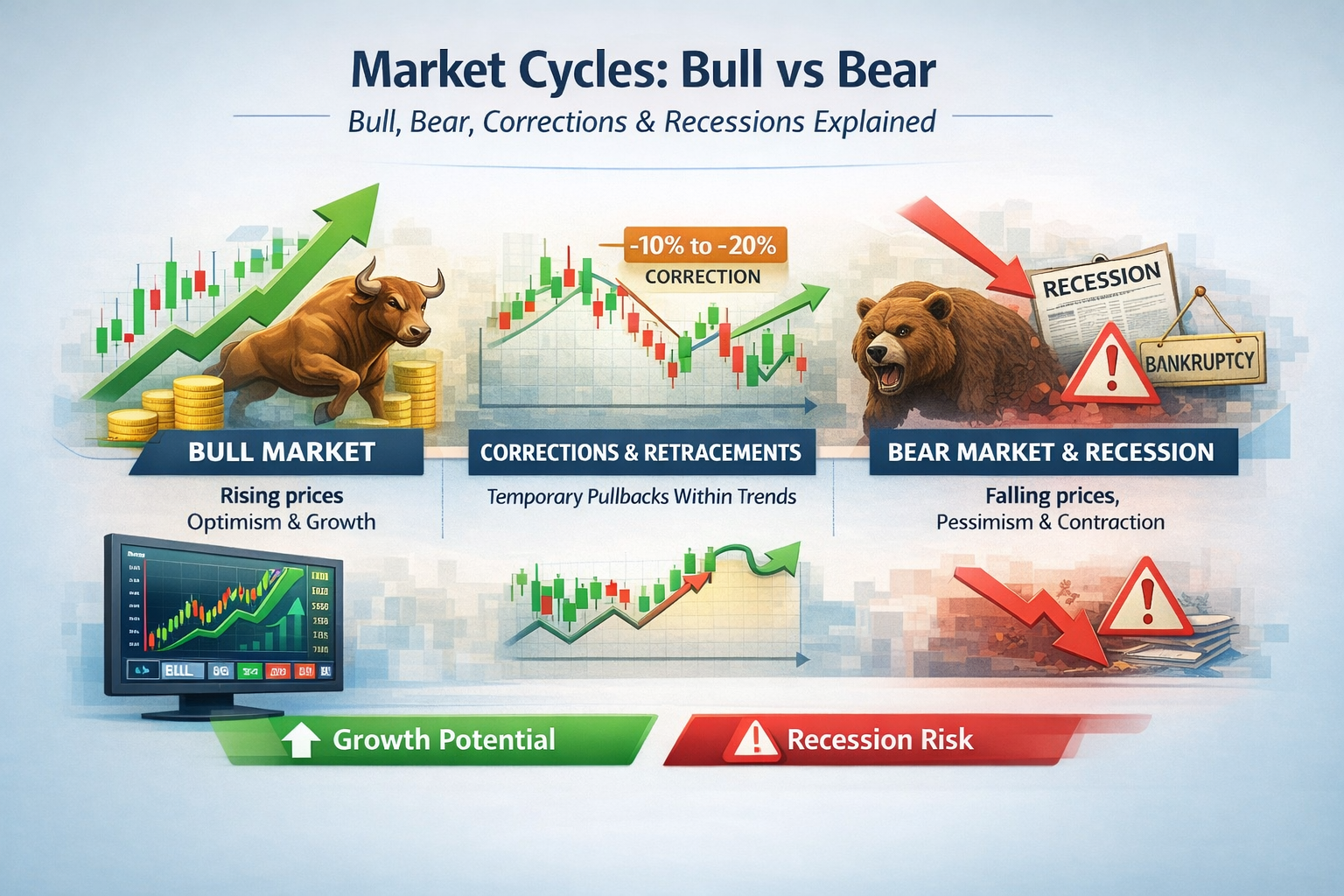
Market cycles are patterns in which asset prices rise (bull markets) and fall (bear markets) over time. They happen because of changes in economic growth, investor sentiment, and news events. Understanding the basics of bull vs. bear markets, corrections, and recessions can give you clarity and help you manage your investments with less stress.
- Bull Market: Prices rise steadily; optimism is high.
- Bear Market: Prices drop for an extended period; pessimism rules.
- Correction: A short-term drop (typically 10% or more) during a larger trend.
- Recession: A significant weakening of the economy, often leading to falling stock prices.
Step-by-Step Guide to Understanding Market Cycles
- Recognize Market Cycle Types
Learn to spot when the market is "bullish" (prices going up) or "bearish" (prices going down). Corrections and recessions are different phases to look out for.
- Follow Economic Indicators
Keep an eye on news about job reports, interest rates, inflation, and company earnings. These often signal where we are in a cycle.
- Understand Investor Sentiment
Notice if headlines are optimistic or fearful—these emotions can drive cycles.
- Diversify Investments
Spread your money across different assets (stocks, bonds, cash) since different parts of the market behave differently in each cycle.
- Have a Plan for Each Phase
In a bull market: Let investments grow, but avoid getting greedy. In a bear market: Stay calm, and avoid panic selling.
Detailed Breakdown of Market Cycles
- Bull Markets
Characterized by strong economic growth, rising stock prices, and positive investor sentiment. These periods can last for months or years, and many investors see significant gains.
- Bear Markets
Defined by falling prices (usually drops of 20% or more). Economic news is often negative, and investors tend to sell or hold investments in fear of deeper losses.
- Corrections
Sharp but usually short-lived declines of 10% or more. Corrections can be healthy "breathers" during longer bull markets, often resetting prices before growth resumes.
- Recessions
Marked by a significant economic slowdown—businesses earn less, people may lose jobs, and markets can fall further. Recessions usually last for several months, but they are a normal part of long-term cycles.
Advantages of Understanding Market Cycles
- Clarity: Helps you avoid panic selling during downturns.
- Preparation: Allows you to plan asset allocation for different cycles.
- Growth Opportunity: Buy investments at lower prices during bear markets.
- Peace of Mind: Makes the investing experience less stressful overall.
Disadvantages & Risks
- Markets are unpredictable—timing the exact start/end of cycles is nearly impossible.
- Panic or excitement can cloud judgment, leading to poor decisions.
- Some stocks or assets may never recover after big downturns.
Alternative Investment Options
- Bonds: Generally less risky during bear markets or recessions.
- Cash or Money Market Funds: Useful for stability and emergency needs.
- Real Estate: May hold value or provide income, but can also be affected by economic cycles.
- Precious Metals (like gold): Sometimes perform well when stocks fall.
- Index Funds: Provide broad market exposure, reducing the risk from individual stocks.
Beginner’s Tips
- Invest regularly through good and bad times (dollar-cost averaging).
- Focus on long-term goals, not short-term market swings.
- Don’t try to “time the market”; even pros rarely succeed.
- Keep learning—knowledge reduces fear.
Advanced Strategies for Experienced Traders
- Use technical analysis to spot potential market turning points.
- Employ options or hedging tactics to protect investments in volatile times.
- Diversify globally—different regions may have different cycles.
- Rebalance your portfolio regularly to maintain risk levels.
Frequently Asked Questions (FAQs)
What is a market cycle?
A market cycle refers to the repeated pattern of rising and falling prices in financial markets over time, often driven by changes in the economy and investor emotions.
How long do bull and bear markets last?
Bull and bear markets can last months or years—bull markets tend to last longer, but bear markets can be steep and sudden.
Can I still make money in a bear market?
Yes, by staying calm, considering alternatives, and sticking to your plan, many investors find opportunities even when prices are dropping.
By understanding market cycles—bull markets, bear markets, corrections, and recessions—you'll be better prepared to manage your investments wisely and grow your wealth over time.