Journaling and Analytics: Unlocking Personal Growth and Smarter Decisions
Introduction
Whether you want to develop self-awareness, understand your habits, or make informed investment decisions, journaling and analytics can be your best allies. This duo gives you clarity and direction, effortlessly connecting your past actions to wiser future choices.
Ever stared at a blank page, unsure where to begin documenting your thoughts or results? You’re not alone. Starting a journaling and analytics journey feels overwhelming for many beginners. Let’s break down this process in the simplest, most approachable way.
What is Journaling and Analytics?
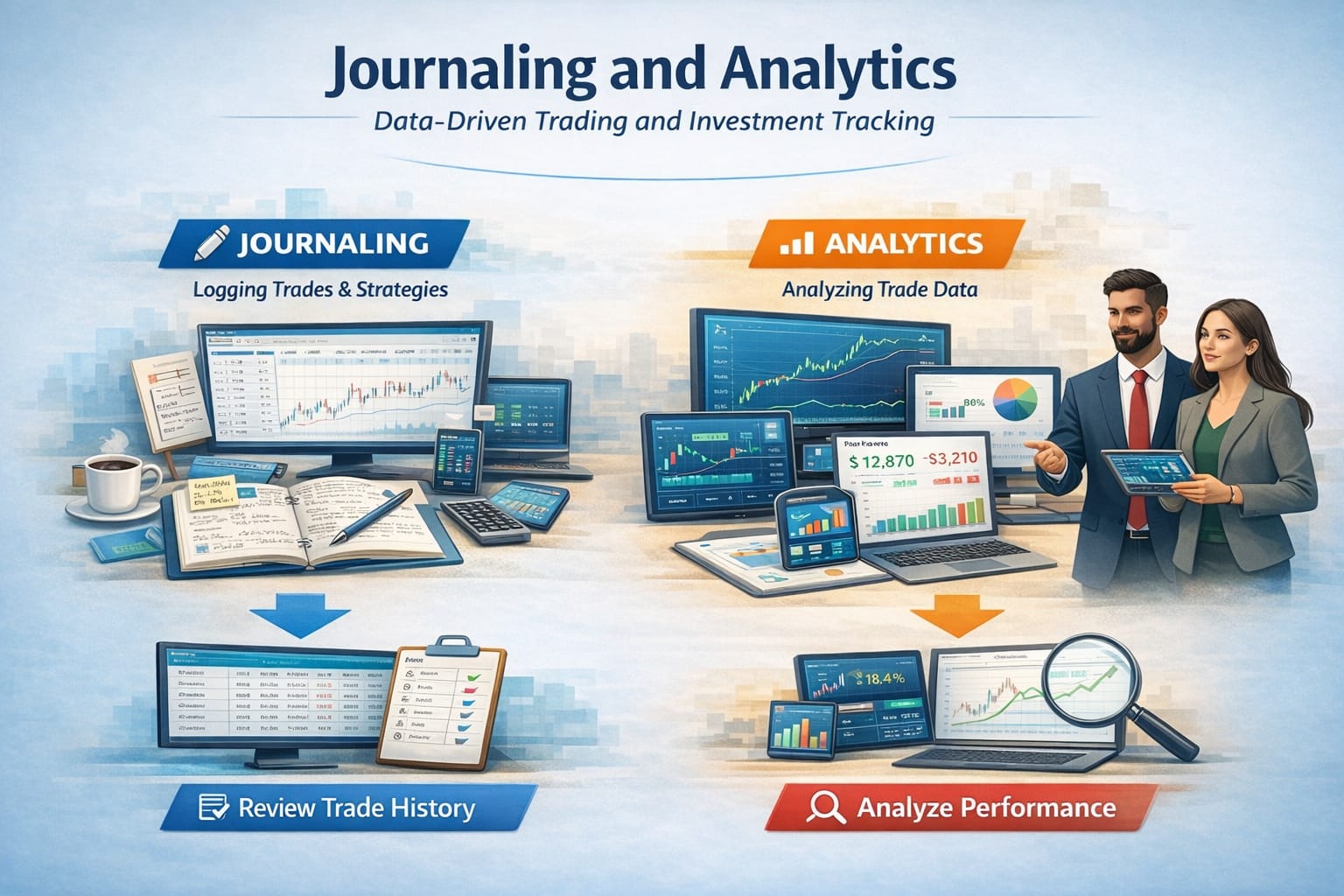
Journaling involves regularly writing down your thoughts, experiences, or investment activity. Analytics adds the next layer—analyzing your entries to spot patterns, turning random notes into actionable insights.
Essence: Journaling and analytics provide clarity—making sense of your daily actions, emotions, or trades, so you can continuously improve.
Relatable Example
Think of it as keeping a diary, but with the superpower to look back, notice trends, and adjust what you do for better results. If you’ve ever wondered, “Why do I keep making the same mistakes?” journaling and analytics can reveal the answer.
Step-by-Step Guide: How to Start Journaling and Analytics
- Choose Your Medium.
Paper notebook, digital app, or spreadsheet—pick what feels most comfortable.
- Set a Daily or Weekly Routine.
Allocate 5–10 minutes at a regular time. Consistency is key.
- Record Key Details.
For personal growth: emotions, actions, lessons.
For investing: date, buy/sell actions, reasons, results.
- Review and Reflect.
Weekly or monthly, read your entries. Look for patterns or repeated outcomes.
- Apply Analytics.
Use simple methods—highlight recurring themes, chart your trades or moods in a spreadsheet, or use built-in analytics in journaling apps.
- Adjust and Improve.
Use insights to tweak habits, strategies, or investment decisions.
Detailed Breakdown: Making Journaling and Analytics Work for You
- Goal-setting: Write down your intent for each session (e.g., "Why did I make this choice?").
- Emotion tracking: Note feelings tied to your actions or trades. Over time, see what emotion drives your decisions.
- Numbers and patterns: Use basic analytics (counts, trends) to spot what works and what doesn’t.
- Review milestones: Each month, sum up your progress and note any changes or notable lessons.
Advantages of Journaling and Analytics
- Self-awareness: Know your strengths, weaknesses, and triggers.
- Better decision-making: Learn from past actions and adjust future strategies.
- Consistency: More likely to stick to good habits or investment plans.
- Progress tracking: See tangible proof of growth and improvement.
- Stress relief: Putting thoughts on paper often reduces anxiety.
Disadvantages of Journaling and Analytics
- Time commitment: Requires regular effort to maintain.
- Data overload: Too much information can be overwhelming if not organized.
- Honesty needed: Benefits come only with true, accurate entries—not just what you want to see.
Alternative Options If Journaling Isn’t for You
- Mood or habit tracker apps: Quick and visual alternatives to detailed journaling.
- Voice notes: Record your thoughts instead of writing them down.
- Accountability partners: Share goals and results with a friend or group instead of a journal.
- Professional coaching: Work with a coach to track and analyze progress together.
Beginner’s Tips for Journaling and Analytics
- Start simple. Even a few sentences a day is progress!
- Be honest with yourself—note successes and setbacks.
- Use prompts: “What did I do well today?” or “What would I do differently?”
- Don’t worry about grammar or style—focus on substance.
- Set reminders so you don’t forget to write.
Advanced Variations for Experienced Users
- Create charts or graphs of your progress over time.
- Integrate data from multiple sources (health, finances, mood) for a holistic view.
- Automate analytics using digital tools with built-in reports.
- Analyze journal content for deeper patterns, such as using keyword analysis or sentiment tracking.
- Set long-term goals with strategic checkpoints using your analytics insights.
Frequently Asked Questions (FAQs)
Q: Do I need to journal every day to benefit?
A: No—consistency matters more than frequency. Start with what feels manageable, even once a week.
Q: What’s the best tool for journaling and analytics?
A: The one you’ll consistently use—paper, app, or spreadsheet.
Q: What if I miss a few days?
A: Just pick up where you left off. Progress is about persistence, not perfection.
Q: Can journaling and analytics help with investing?
A: Absolutely. Recording and analyzing trades or decisions sharpens your investing skills and helps you avoid repeating mistakes.
Conclusion
Journaling and analytics are simple yet powerful tools for anyone seeking growth—personally, professionally, or financially. By tracking your actions and honestly reflecting on them, you open the door to smarter decisions, more confidence, and visible self-improvement. Start your journaling and analytics journey today, and let your past guide your brighter future!