Hedging Basics: Inverse ETFs and Options Explained
Introduction
Investing isn’t always a straight path—sometimes markets dip, and even seasoned investors feel the pinch. That’s where hedging basics come into play, offering essential tools to cushion your portfolio against tough times. In this guide, we'll unpack the meaning and importance of hedging, especially focusing on inverse ETFs and options.
What is Hedging?
Hedging means using investment strategies designed to reduce the impact of market losses—think of it like buying insurance for your stocks. The essence of hedging basics is simple: protect your investments from unexpected slumps and keep your financial future steadier.
New to investing? Imagine hedging as carrying an umbrella—you may not always need it, but you’ll be glad you have it when the rain starts!
Step-by-Step Guide: Hedging with Inverse ETFs and Options
- Identify Your Risk
Understand which part of your portfolio is vulnerable, like a collection of tech stocks or an overall market fund.
- Choose a Hedging Tool
Decide between inverse ETFs (they go up when the market falls) or options contracts (they give you the right to sell or buy at certain prices).
- Set Your Hedge Size
Start small. For beginners, hedging a portion of your portfolio—like 10-20%—is usually enough.
- Take Action
- For inverse ETFs: Buy an ETF like SH (which rises when the S&P 500 falls) or similar funds matching your exposure.
- For options: Consider purchasing a "put option", which increases in value as the underlying stock or index drops.
- Monitor and Adjust
Markets change, so check your hedge periodically and adjust as needed.
Breaking Down Hedging with Inverse ETFs and Options
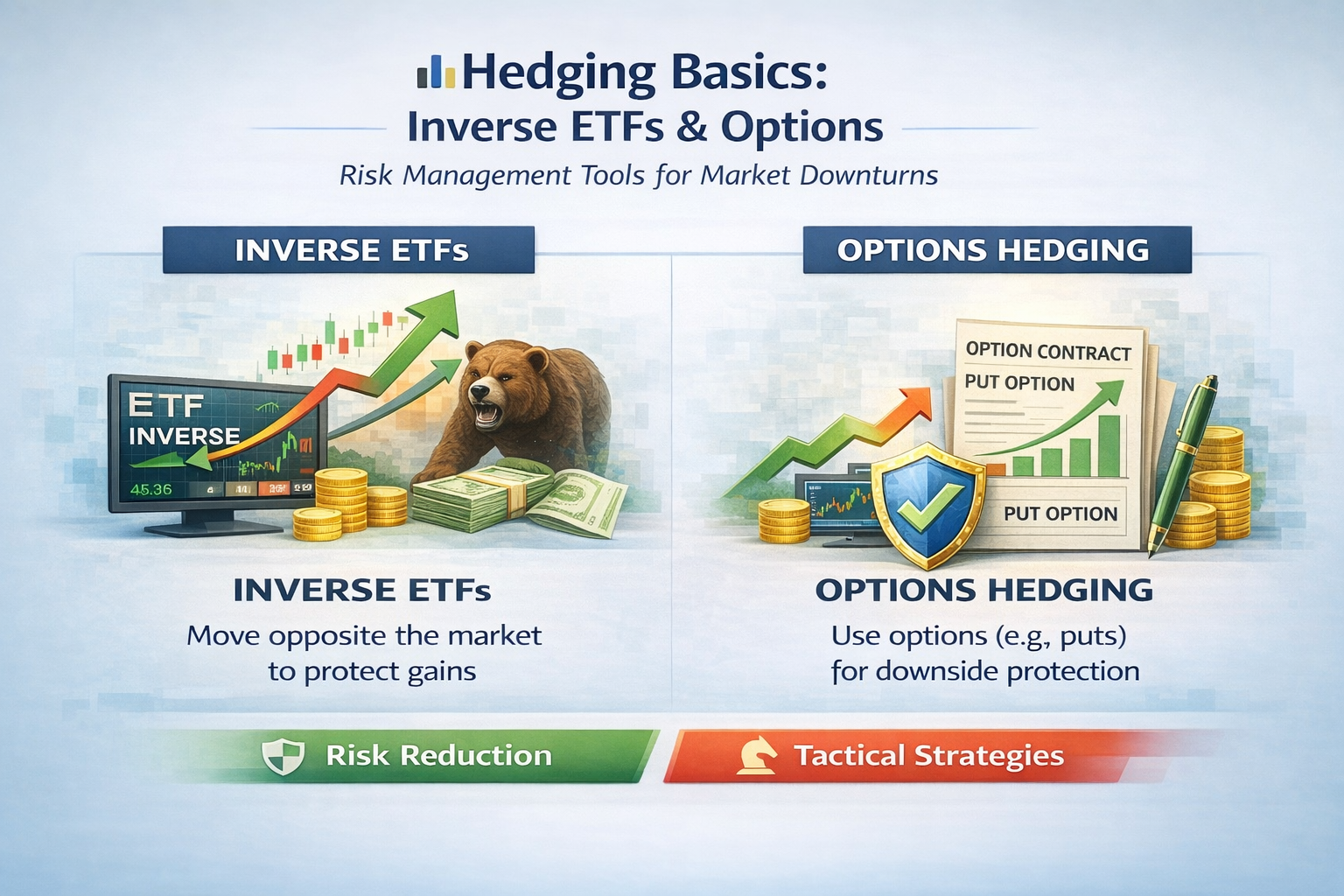
- Inverse ETFs: These are funds designed to move in the opposite direction of a market index. If the market falls, inverse ETFs go up, offsetting some of your losses.
- Options: "Put" options give you the right to sell stocks or ETFs at a specific price, so if the market drops, you can limit your losses.
- Both: Used well, these hedging basics tools can help balance risk, but they require some learning.
Advantages of Hedging Basics
- Reduces Losses: Shrink the impact of market downturns on your investments.
- Peace of Mind: Stay calmer during market volatility.
- Flexibility: Adapt quickly to changes in your risk tolerance or market outlook.
- Diversification: Add another defensive layer to your overall investment strategy.
Disadvantages of Hedging Basics
- Costs: Inverse ETFs charge fees and options cost a premium—those add up.
- Complexity: Requires research, as using these tools incorrectly can result in losses.
- Potential to Cap Gains: You might miss out on big rallies if you hedge too much.
Alternative Investment Options
- Bonds: Traditionally less risky than stocks and can act as a buffer in portfolios.
- Dividend Stocks: Provide regular income and tend to be less volatile.
- Cash Holdings: Temporarily moving some assets to cash can reduce exposure.
- Gold or Precious Metals: Often hold value when stocks dip.
Beginner's Tips for Hedging Basics
- Start slow—practice with small amounts until you’re comfortable.
- Research each ETF or option before buying.
- Watch out for extra costs and fees.
- Don’t over-hedge; more protection isn’t always better.
- Ask questions—there’s no such thing as a silly question when learning hedging basics!
Advanced Variations for Experienced Traders
- Spread Strategies: Use combinations of options, like buying a put and selling another at a different strike price, to fine-tune your hedge.
- Short Selling: Take more direct bets against stocks, though riskier, and requires a margin account.
- Tail Risk Hedges: Use long-dated options to protect against bigger market shocks.
- Multi-Asset Hedging: Combine inverse ETFs, options, and other assets for diversified protection.
FAQs About Hedging Basics
What’s the difference between inverse ETFs and options?
Inverse ETFs move opposite to the market automatically; options give you choice but need more timing and understanding.
Is hedging basics only for professionals?
Not at all! With some research and care, anyone can use basic hedging strategies.
How much of my portfolio should I hedge?
It depends on your risk tolerance, but many investors start by hedging 10-20%.
Can I lose money by hedging?
Yes—fees and premiums do add up, and if markets keep rising, your hedges can lose value.
Bottom line: Mastering hedging basics using inverse ETFs and options helps protect your portfolio when markets wobble. Start small, stay informed, and add layers of protection as you grow more comfortable investing!