Diversification vs. Concentration: Which Investment Strategy Is Right for You?
Introduction
When it comes to growing your savings, two strategies often take center stage: diversification vs. concentration. In other words, should you spread your money across many investments (diversification), or put most of your eggs in one basket you believe in (concentration)?
If you’re just starting to invest, these terms may sound technical. Don’t worry—this guide will break down both approaches in simple language, so you can feel confident making your financial choices.
Hook: Imagine you’re at a buffet. Would you pile your plate with only pizza, or sample a bit of everything? Just like with food, picking the right investment mix can make you feel full and safe!
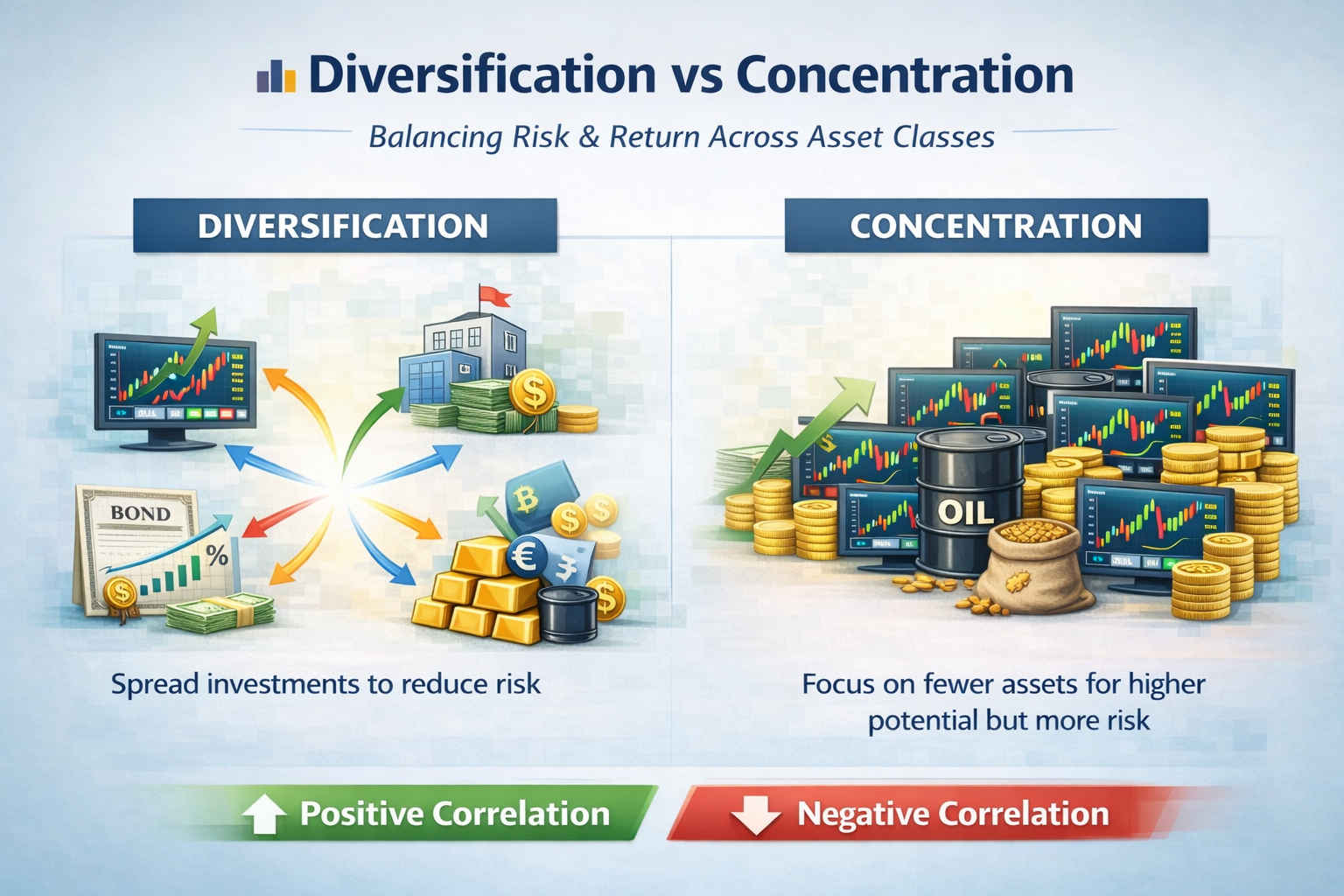
What Are Diversification and Concentration?
- Diversification: Spreading your money across different investments (such as stocks, bonds, funds, or even real estate). The idea is that if one investment drops, others might do well, balancing your risk.
- Concentration: Focusing most of your money on just a few investments—maybe one or two companies or sectors you strongly believe will rise. This can boost your gains, but also increases the risk if things go wrong.
Essence in one line: Diversification is about safety in numbers; concentration is about taking bigger, focused bets.
A Step-by-Step Guide for Beginners
- Understand Your Goals
Ask yourself: Do you want steady growth, or are you aiming for high returns (and okay with risks)?
- Assess Your Risk Tolerance
How would you feel if your investments dropped 10% overnight? Your comfort level helps you choose between diversification vs. concentration.
- Learn About Both Strategies
- Diversification: Buy different types of assets (stocks, bonds, ETFs, real estate), or even companies in different industries and countries.
- Concentration: Invest a large portion in a single company, sector, or asset you expect to perform very well.
- Start Small
Try a mix to see what suits you best. Many beginners start with diversification to feel secure.
- Monitor & Adjust
Check your outcomes every few months. As you learn more and grow comfortable, you may choose to concentrate some investments or spread out further.
Advantages of Diversification vs. Concentration
- Diversification:
- Spreads risk—one loss won’t wipe you out.
- Reduces emotional stress if markets are shaky.
- Can deliver steady, predictable growth over time.
- Concentration:
- Potential for much higher returns if your picks are right.
- Simpler to research and manage fewer investments.
- Lets you act on deep knowledge or strong beliefs.
Disadvantages (If Any)
- Diversification:
- Limits your maximum upside—very big gains are rare.
- Can require more time to research and manage various assets.
- May 'water down' winning investments with underperformers.
- Concentration:
- Higher risk of large losses if your chosen investments go badly.
- Can be stressful—your financial success depends on fewer bets.
- Requires lots of research and confidence in your picks.
Offer Alternative Investment Options
- Index Funds: Easy way for beginners to diversify—these funds track large groups of stocks.
- Mutual Funds: Let professionals build a diverse mix for you.
- Bonds: Add stability and reduce risk in your portfolio.
- Real Estate Investment Trusts (REITs): Invest in property without buying a whole house.
Beginner’s Tips
- Start diversified to learn the basics without big shocks.
- Don’t put all your money into trendy stocks or sectors.
- Automate investments with monthly contributions to funds.
- Keep emotions in check—even Warren Buffett didn’t win overnight!
Advanced Variations for Experienced Traders
- Tactical Asset Allocation: Shift between diversification vs. concentration as opportunities arise.
- Sector Rotation: Concentrate on sectors you believe will outperform in the next economic cycle.
- Thematic Investing: Combine focus (concentration) with broader trends for balanced risk.
- Use stop-loss orders to manage risk in concentrated positions.
FAQs About Diversification vs. Concentration
- Is diversification always better for beginners?
Usually yes, as it protects you from big losses while you’re learning.
- Can concentration ever be smart?
Yes, if you have strong knowledge or insights about a specific investment—and are prepared for risks.
- How many investments is ‘enough’ for diversification?
Many experts suggest at least 10–15, spread across industries, but even 5 can lower risk compared to just 1 or 2.
- Can I combine diversification and concentration?
Absolutely! Many investors diversify across sectors, but concentrate within one they know best.
Conclusion
Choosing between diversification vs. concentration comes down to your risk tolerance, knowledge, and goals. Start slow, keep learning, and never bet more than you can afford to lose. With these strategies, you’re now ready to build a smarter, safer, and more rewarding investment journey!