Correlations: Stocks, Bonds, Commodities, Currencies
Introduction
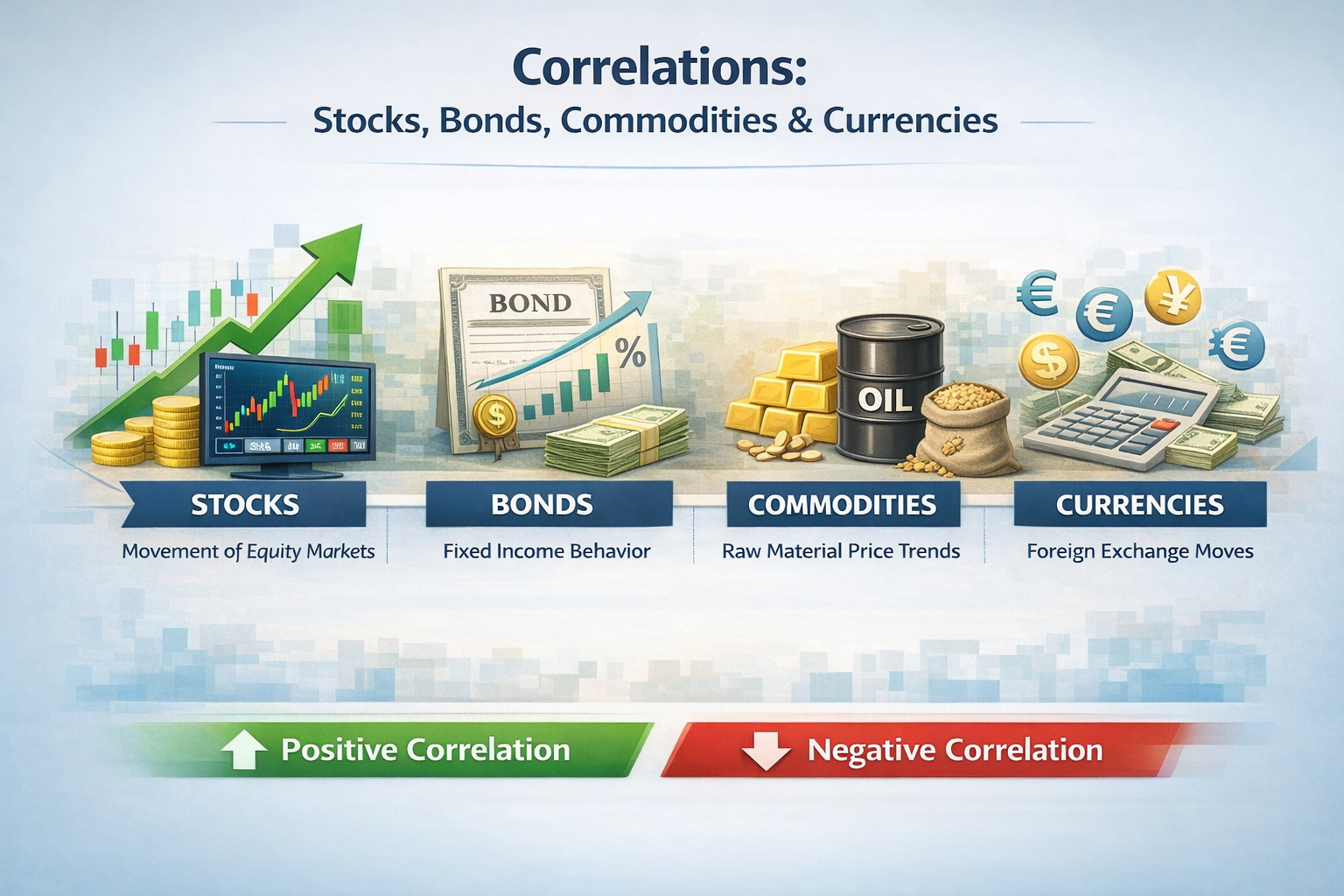
When diving into the world of investing, you'll often hear about the correlations between stocks, bonds, commodities, and currencies. These correlations help investors understand how different financial assets move in relation to each other, offering clarity for building resilient portfolios.
Imagine having a team, where every player (stocks, bonds, commodities, currencies) reacts differently to changes on the field. Understanding these dynamics can help even beginners avoid putting all their eggs in one basket—literally and financially!
What is Correlation in Investing?
Correlation measures how two assets move in relation to one another. For example, if stocks and bonds have a negative correlation, when one goes up, the other tends to go down. Conversely, a positive correlation means they often move in the same direction.
In essence, understanding correlations: stocks, bonds, commodities, currencies means knowing how changes in one market can influence or predict movements in others.
Step-by-Step Guide: Understanding Correlations
- Learn Key Asset Classes:
- Stocks: Shares of companies.
- Bonds: Loans made to governments or companies.
- Commodities: Physical goods like gold, oil, or wheat.
- Currencies: Money from different countries (USD, EUR, JPY, etc.).
- Observe Historical Data:
- Look at charts to see how each asset moved during major events (e.g., 2008 crisis).
- Notice if assets usually move together or in opposite directions.
- Check Correlation Coefficients:
- These are numbers between -1 (move opposite) and +1 (move together).
- Zero means no clear relationship.
- Apply to Your Portfolio:
- Mix assets with low or negative correlations to reduce big swings in your investments.
Breaking Down the Correlation: Stocks, Bonds, Commodities, Currencies
Here’s how each pair often relates:
- Stocks & Bonds: Frequently move in opposite directions. When stocks fall, investors often buy bonds for safety.
- Stocks & Commodities: Sometimes rise together in strong economies but commodities like gold may go up when stocks are down.
- Commodities & Currencies: Rising oil prices may strengthen oil-producing currencies (like the Canadian dollar).
- Bonds & Currencies: Interest rates affect both bonds' returns and currency strength.
Correlations can change during crises or booms, so regular checks are helpful.
Advantages of Using Correlations in Investing
- Diversification: Reduces your overall risk by mixing assets that behave differently.
- Smoother Returns: You’re less likely to see big losses in your portfolio.
- Better Decision-Making: Helps identify when to adjust your investments based on market trends.
Disadvantages of Relying on Correlations
- Correlations Can Change: During a crisis, assets that were uncorrelated might suddenly move the same way.
- Historical Data ? Future Guarantee: Past relationships may not repeat.
- Too Complex: For beginners, tracking multiple relationships can feel overwhelming.
Alternative Investment Options
If tracking correlations: stocks, bonds, commodities, currencies is too complex or risky, consider:
- Index Funds: Simple way to diversify without analyzing individual assets.
- Target-Date Funds: Automatically adjust asset mix over time.
- Real Estate: Often moves separately from stocks and bonds.
- Robo-Advisors: Automated tools that handle diversification for you.
Beginner’s Tips
- Start simple: Mix just two or three different asset types.
- Check correlations yearly; don’t worry about monthly swings.
- Don’t chase trends—focus on your long-term plan.
- Read trusted resources or ask an advisor before making major changes.
Advanced Variations for Experienced Traders
- Use rolling correlations to see how relationships evolve over time.
- Implement strategies like pair trading (betting that two assets' price difference will change).
- Analyze international correlations: See how US stocks move with foreign currencies or commodities.
- Experiment with advanced software and data analytics for deeper insight.
FAQs on Correlations: Stocks, Bonds, Commodities, Currencies
Q: Why do investors care about correlations?
A: Understanding relationships helps build portfolios that are less risky and bounce back faster during market drops.
Q: Do correlations stay the same forever?
A: No. Correlations can shift during market stress or changes in the economy—so check regularly.
Q: Should beginners worry about tracking every correlation?
A: Not at first. Focus on having a mix of different investment types, and learn more as you go.