Backtesting Strategies: The Complete Beginner’s Guide
Introduction
Are you just starting to explore the world of trading or investing? One powerful tool you’ll likely encounter is Backtesting strategies. These methods help traders see how a trading idea might have worked in the past, giving much-needed clarity before risking real money.
Imagine being able to “travel back in time” to check if your strategy would have made a profit—before you ever commit a dollar. That’s what Backtesting is all about.
If you’re worried about making costly beginner mistakes, you’re not alone! Many traders wish they could test their plans first. With Backtesting strategies, you can—right from your own computer.
What is Backtesting?
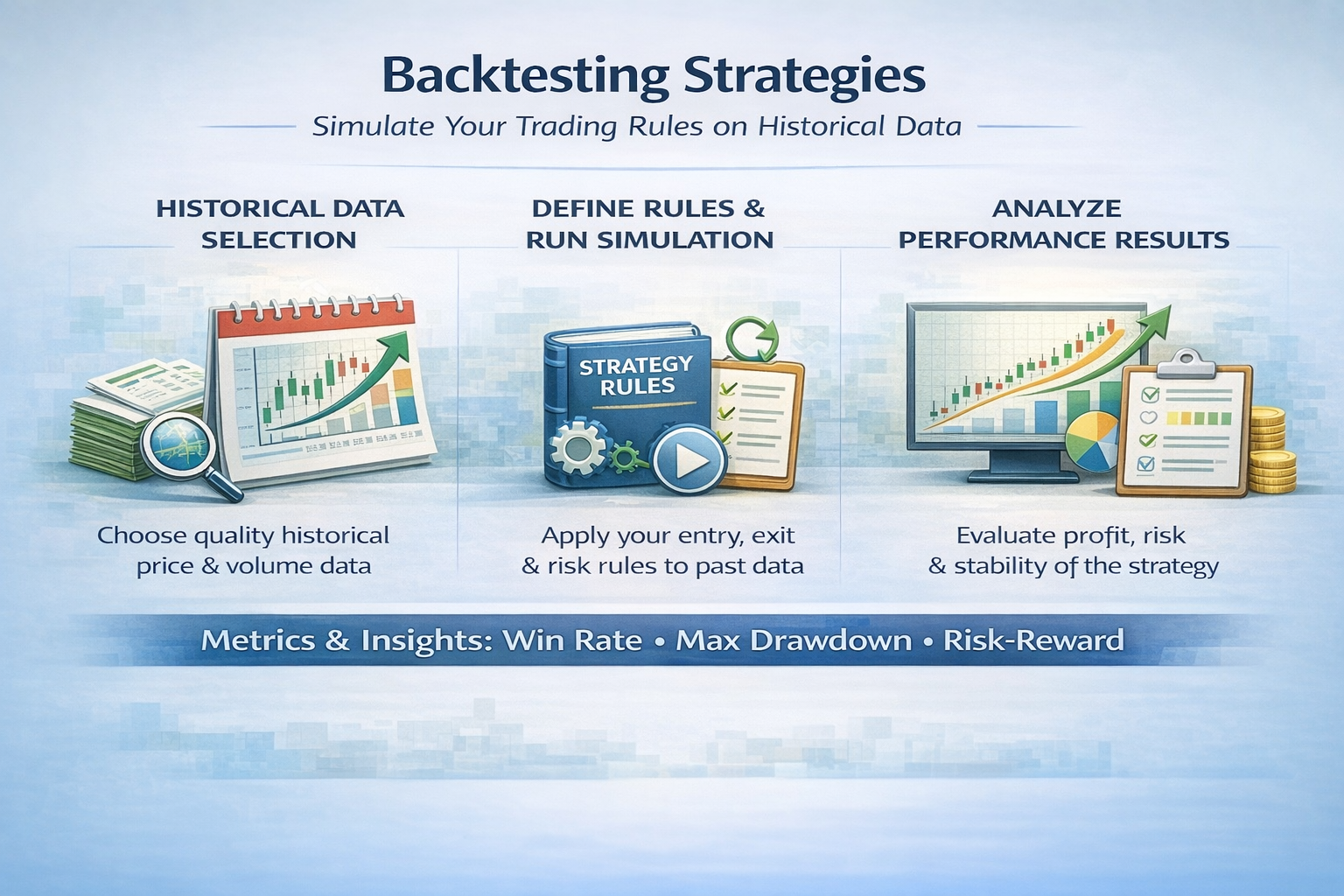
Backtesting means applying your trading idea to historical data to see how it would have performed. The goal? To gain insight into whether your approach is likely to work in the real market.
At its core, Backtesting strategies offer explanation and confidence to traders by showing how rules would have played out in the past.
Step-by-Step Guide: How to Backtest a Strategy
- Choose or Create a Strategy:
- Define your entry and exit rules. For example: “Buy when the stock’s 50-day average rises above the 200-day average.”
- Decide your risk management (like stop loss levels).
- Gather Historical Data:
- Find past data for the timeframe and asset you want to test—stocks, crypto, forex, etc.
- Free data sources: Yahoo Finance, Google Finance, Investing.com.
- Apply Your Rules:
- Use software, a spreadsheet, or free online backtesting tools.
- Go through the data and mark every point where your strategy would buy or sell.
- Record the Results:
- Write down wins, losses, profit or loss for each trade, and important statistics (like total return, drawdowns, or win rate).
- Analyze and Adjust:
- Look at the outcome. Did the strategy work? Where did it struggle?
- Tweak your rules and repeat the process if needed.
Advantages of Backtesting Strategies
- Confidence: Test ideas without real risk.
- Optimization: Spot weaknesses and make improvements.
- Clarity: Know exactly when and why to trade.
- Risk Management: Discover drawdowns before they happen in your real account.
Disadvantages of Backtesting Strategies
- Past ? Future: Just because a strategy worked in the past, doesn’t mean it will go on working.
- Curve Fitting: Making a strategy fit the historical data too perfectly can cause it to fail in the real world.
- Overconfidence: Great results can make traders too optimistic.
Alternative Investment Options
- Index Funds: Low-fee funds that track the entire market—no need to build or test a trading system.
- Robo-Advisors: Automated platforms that build and manage a diversified portfolio for you.
- Buy and Hold: Simple approach—buy a quality asset and let it grow over years.
- Mutual Funds: Managed by professionals, these can offer a steady approach for beginners.
Beginner’s Tips for Backtesting
- Start simple—don’t overload your strategy with too many rules at first.
- Avoid changing your system after every losing trade.
- Use free tools—many platforms offer basic backtesting for beginners.
- Keep a notebook of your results and what you learn along the way.
- Remember: Real trading can be different due to emotions, slippage, and unexpected market moves.
Advanced Variations for Experienced Traders
- Automate your backtesting with Python or R for fast analysis.
- Include transaction fees and market slippage for a more realistic outcome.
- Try portfolio-level strategies (testing multiple assets together).
- Optimize and run Monte Carlo simulations to see results in various market scenarios.
FAQs About Backtesting Strategies
- Is backtesting only for stocks?
No. It works for currencies, crypto, options, forex, and even some sports betting models.
- How much data do I need?
The more, the better! At least 3–5 years of data is a good start.
- Can I backtest without coding?
Yes. Many online brokers and free tools let you backtest by point-and-click.
- What’s the best software for backtesting strategies?
For beginners: TradingView and Yahoo Finance. For advanced: Python with Pandas or QuantConnect.
Conclusion
Backtesting strategies are one of the smartest ways to build skills as a trader or investor. By using real historical data, you get a deeper understanding of what truly works—and what doesn’t—before you risk your money. Start small, keep it simple, and remember: every pro was once a beginner, too.