Algorithmic Screening: The Smart Way To Pick Stocks
Introduction
Finding the right stocks or investments can feel overwhelming—so many choices, too much data! Algorithmic screening makes this process easier by filtering stocks or assets based on set rules, automatically spotlighting what fits your needs. In one line: algorithmic screening brings clarity to complex markets by using technology to scan for potential winners.
If you’re new to investing, imagine having a powerful assistant who reads thousands of company reports, financial figures, and news stories all at once—then brings you a list of your best options. That’s the essence of algorithmic screening.
What is Algorithmic Screening?
Algorithmic screening is the process of using computer-based rules (algorithms) to sort through large pools of stocks, bonds, or other assets to find those that fit certain criteria. These criteria might be P/E ratios, dividend yields, market capitalization, or even more complex financial signals.
- Essence: It's all about quick, unbiased filtering for smarter investing.
- For Beginners: Think Netflix suggestions, but for stocks—you set the filters; the algorithm screens the options.
Step-by-Step Guide: How to Use Algorithmic Screening
- Choose a Screening Tool:
- Popular platforms include Yahoo Finance, Finviz, TradingView, and major brokerages.
- Set Your Goal:
- Ask yourself: Are you looking for growth stocks, high dividend payers, value picks, or something else?
- Select Your Criteria:
- Pick factors like stock price, industry, EPS growth, market cap, P/E ratio, or technical signals.
- Apply Filters:
- The tool will sort all available stocks and show only those that meet your rules.
- Review and Research:
- Study the shortlist further: look at charts, read news, and consider fundamentals before making any moves.
- Regularly Update:
- Markets change! Update your filters or re-run the screening as needed.
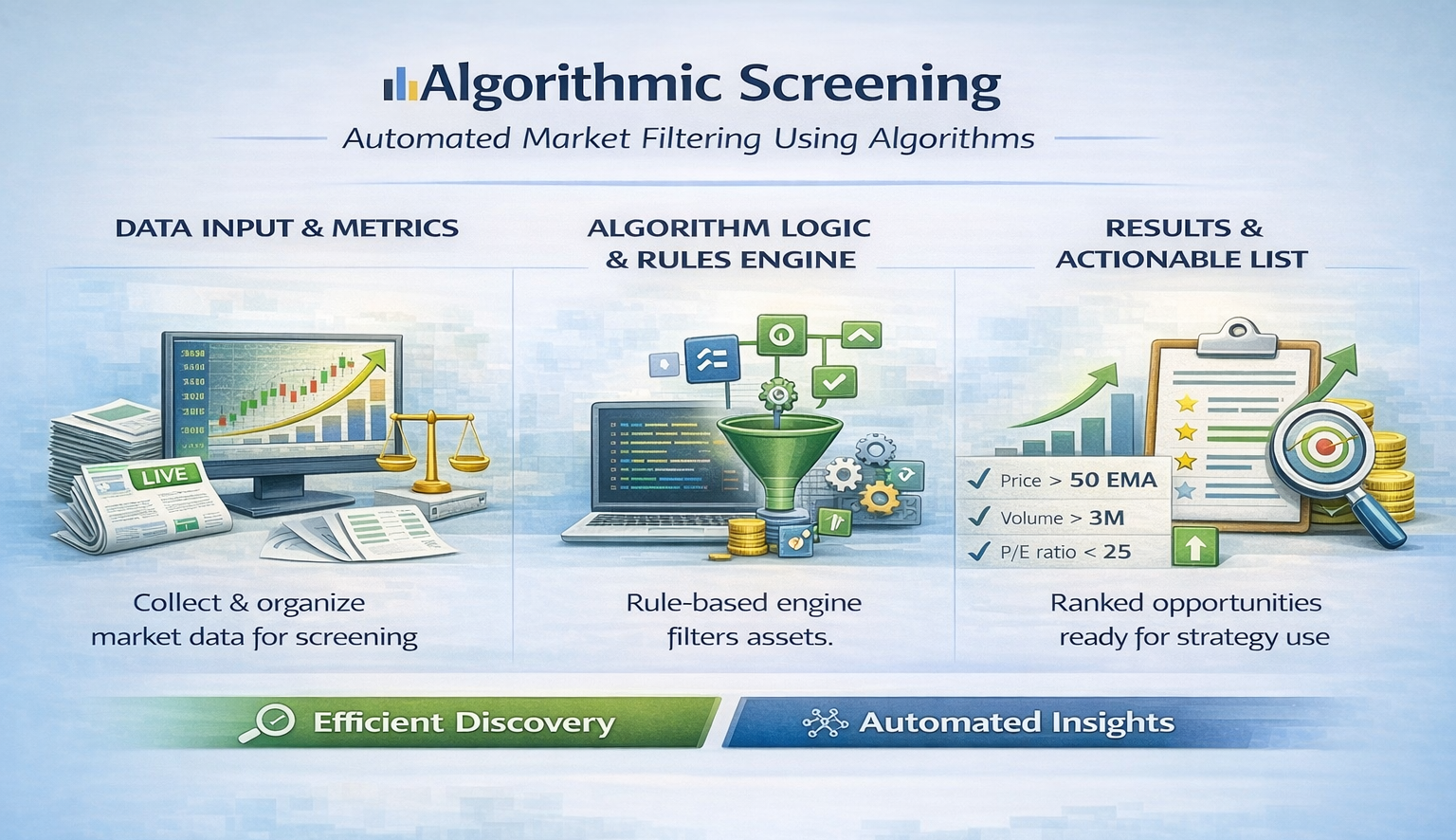
Breaking It Down: How Algorithmic Screening Works
- Data Collection: The algorithm pulls in real-time or historical data on thousands of assets.
- Rule Application: Your selected filters (like "P/E below 20, in the tech sector, over $1B market cap") are applied.
- Results Display: Matching securities appear on a shortlist for you to consider.
Most platforms let you save your screening criteria, so you can quickly repeat the process next time.
Advantages of Algorithmic Screening
- Speed: Instantly narrow down thousands of choices.
- Objectivity: Filters out emotions and biases.
- Customizable: Tailor every filter to your goals.
- Scalability: Efficiently screen across global markets, not just your local stocks.
- Repeatability: Re-run your screens anytime with new data.
Disadvantages of Algorithmic Screening
- Over-Reliance: Algorithms can miss “hidden gem” stocks or unique situations outside preset filters.
- Garbage In, Garbage Out: Poorly chosen criteria can overlook good opportunities or select risky ones.
- Lack of Context: Algorithmic screening doesn’t factor in breaking news or qualitative insights.
Alternative Investment Options
- Robo-Advisors: Automated platforms that build complete portfolios for you.
- Mutual Funds and ETFs: Ready-made diversification without needing to pick stocks yourself.
- Direct Indexing: Invest in a broad market with customized exclusions or tilts.
- Manual Research: Traditional method—reading reports, analyst opinions, and news on your own.
Beginner’s Tips for Algorithmic Screening
- Start simple: Two or three filters are enough at first.
- Understand each metric you use; don’t just copy others’ screens.
- Practice in a simulated (paper trading) environment.
- Remember: A screened stock list is a starting point, not investment advice.
- Always double-check results manually before trading.
Advanced Variations for Experienced Traders
- Use technical indicators like RSI, MACD, or custom signals.
- Combine fundamental and technical criteria for more precision.
- Integrate news sentiment analysis via APIs or advanced tools.
- Automate screening and even order placement with API-based platforms.
FAQs: Algorithmic Screening
- Is algorithmic screening safe?
It’s a tool—safe if used wisely, but it doesn’t guarantee profits. Always do further research.
- Do I need coding skills?
No. Most retail screeners are user-friendly; no coding required.
- How often should I rerun my screens?
Regularly—weekly or monthly, depending on your strategy and market conditions.
- Is algorithmic screening the same as algorithmic trading?
No. Algorithmic screening means finding investments; algorithmic trading means automatically buying/selling based on preset algorithms.
Conclusion
Algorithmic screening is indispensable for modern investors—providing clarity, speed, and focus. With a bit of learning, anyone can harness this tool to feel more confident and selective in their investing journey. Remember, use your shortlist as a springboard for deeper research, and keep growing your knowledge of financial markets.